Wildfires close routes along Camino Francés

Camino Wildfire smoke in Trabadelo

Due to high concentrations of smoke that make affect health, the Civil Protection of Castilla y Léon announced that as of August 17th, 2025, no passge will be permitted on the section of the camino between Astorga and Ponferrada. Those pilgrims needing to pass through to Ponferrada will be required to do so by bus from Astorga. Local accomodation providers must, to the best of their ability, assist pilgrims on the way by asking them to stay an extra day.

This notice is in effect for only one day, but with such fluid conditions, it may require extentions to these restrictions.

New Pilgrim Compostela Requirements

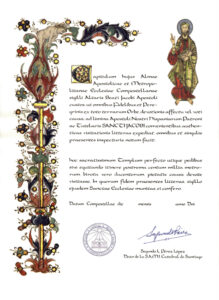
CompostelaRecent updates have modified the requirements for obtaining the Compostela certificate for pilgrims on the Camino de Santiago. Previously, pilgrims needed to walk the last 100 kilometers into Santiago de Compostela. Under the new rules, any 100 kilometers on an official Camino route qualify, provided that the final stage concludes in Santiago. ​Additionally, pilgrims are now required to obtain two stamps per day in their pilgrim passport (Credencial) throughout their journey, not just during the final 100 kilometers as was previously mandated.

These changes aim to offer greater flexibility to pilgrims and help alleviate congestion on popular sections of the Camino. However, interpretations of the new rules vary, and some ambiguity remains regarding specific details. For instance, discussions continue about whether the 100 kilometers must be continuous and how the final stage is defined. ​

Given these ongoing discussions and potential variations in implementation, it’s advisable for pilgrims to consult the official Pilgrim’s Office or the Cathedral of Santiago de Compostela for the most accurate and up-to-date information before planning their journey.

Spring Weather along the Camino

Spring weather along the Camino de Santiago can vary depending on the specific route and the region you are passing through. Here’s a general description:

1. March:
– Early spring along the Camino can still be quite chilly, especially in the mornings and evenings.
– Rain is relatively common, so having waterproof gear is essential.
– Daytime temperatures can range from 10°C to 15°C (50°F to 59°F) on average.

2. April:
– April sees a gradual increase in temperatures, but it can still be cool, especially in the mornings and evenings.
– Rainfall is still common, so waterproof clothing and gear are necessary.
– Daytime temperatures can range from 12°C to 18°C (54°F to 64°F) on average.

3. May:
– May is one of the best months to walk the Camino in terms of weather.
– Temperatures are milder, and days are longer.
– Rainfall decreases as the month progresses, but it’s still a good idea to have waterproof gear handy.
– Daytime temperatures can range from 15°C to 22°C (59°F to 72°F) on average.

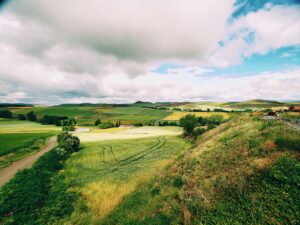
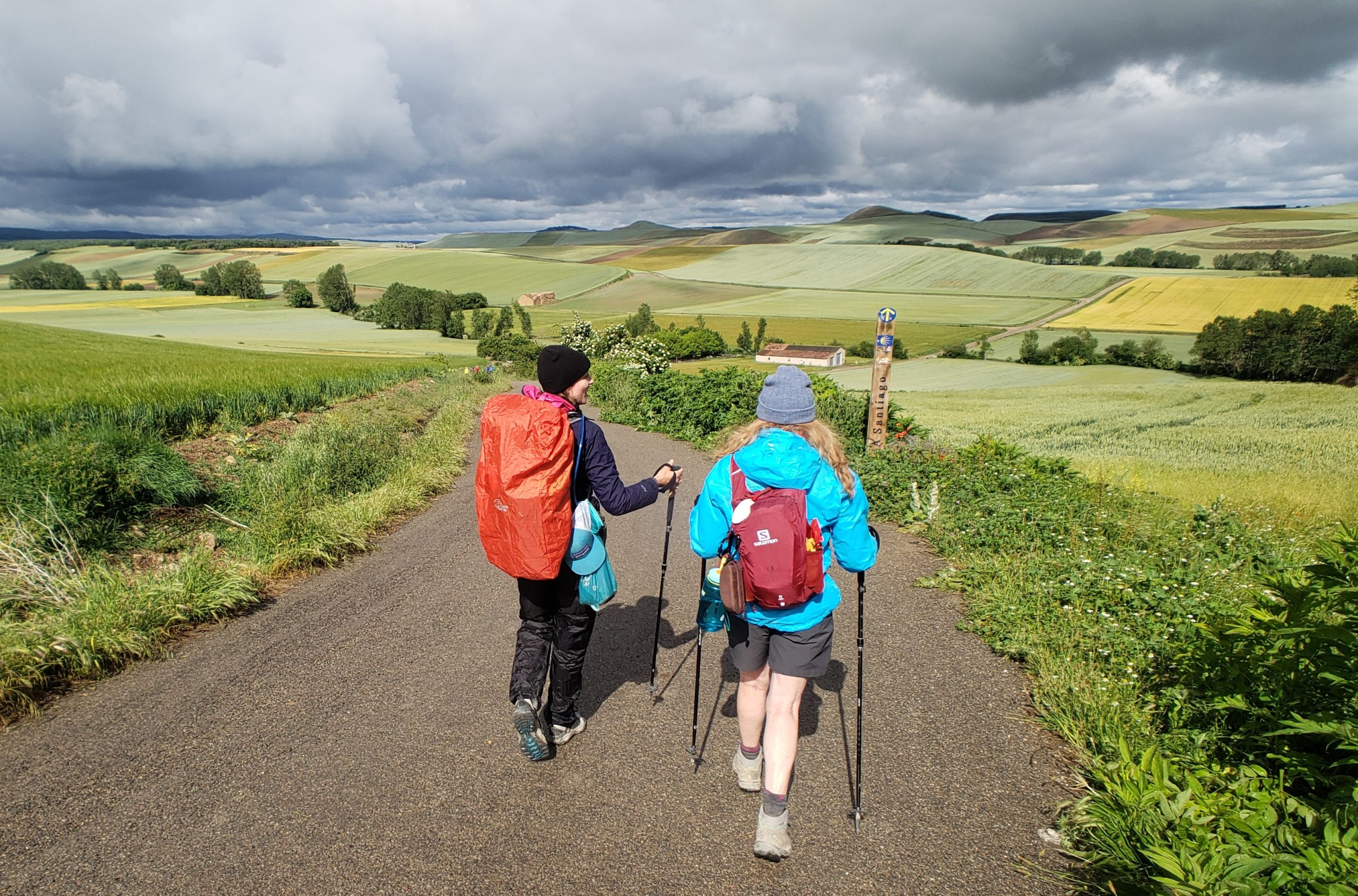
Overall, spring along the Camino de Santiago can be unpredictable, with the potential for both chilly, wet days and warm, sunny days. It’s essential to pack layers and waterproof gear to be prepared for a variety of weather conditions.Camino spring fields Granon

Summer Weather along the Caminos

Summer weather along the Camino de Santiago can vary depending on the specific route you take and the region you are in. However, in general, during the summer months (June to August), the weather tends to be warm to hot, especially in the central and southern parts of the Camino.

Northern Route (Camino del Norte) and Coastal Route (Camino de la Costa):
– Along the northern coast, temperatures are usually milder compared to inland areas.
– Average temperatures range from 20°C to 30°C (68°F to 86°F), but can sometimes be cooler due to oceanic influence.
– Expect occasional rain showers, especially in the mornings and evenings.

French Way (Camino Francés):
– In the central and southern sections, temperatures can be quite hot during the day, ranging from 25°C to 35°C (77°F to 95°F).
– Mornings and evenings can be cooler, but still relatively warm.
– Some days may be extremely hot, especially in the plains of Castilla y León.
– It’s important to protect yourself from the sun and stay hydrated.

Portuguese Way (Camino Portugués):
– Similar to the French Way, temperatures can be quite hot, especially in the central and southern parts.
– Average temperatures range from 25°C to 35°C (77°F to 95°F).
– Coastal sections may be cooler, but still warm.

Primitivo Route (Camino Primitivo):
– Temperatures can be warm to hot, but are generally milder than the French Way in the central and southern sections.
– Average temperatures range from 20°C to 30°C (68°F to 86°F).
– Occasional rain showers can be expected.

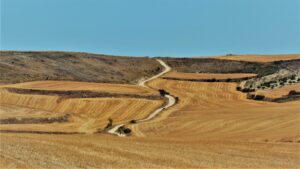
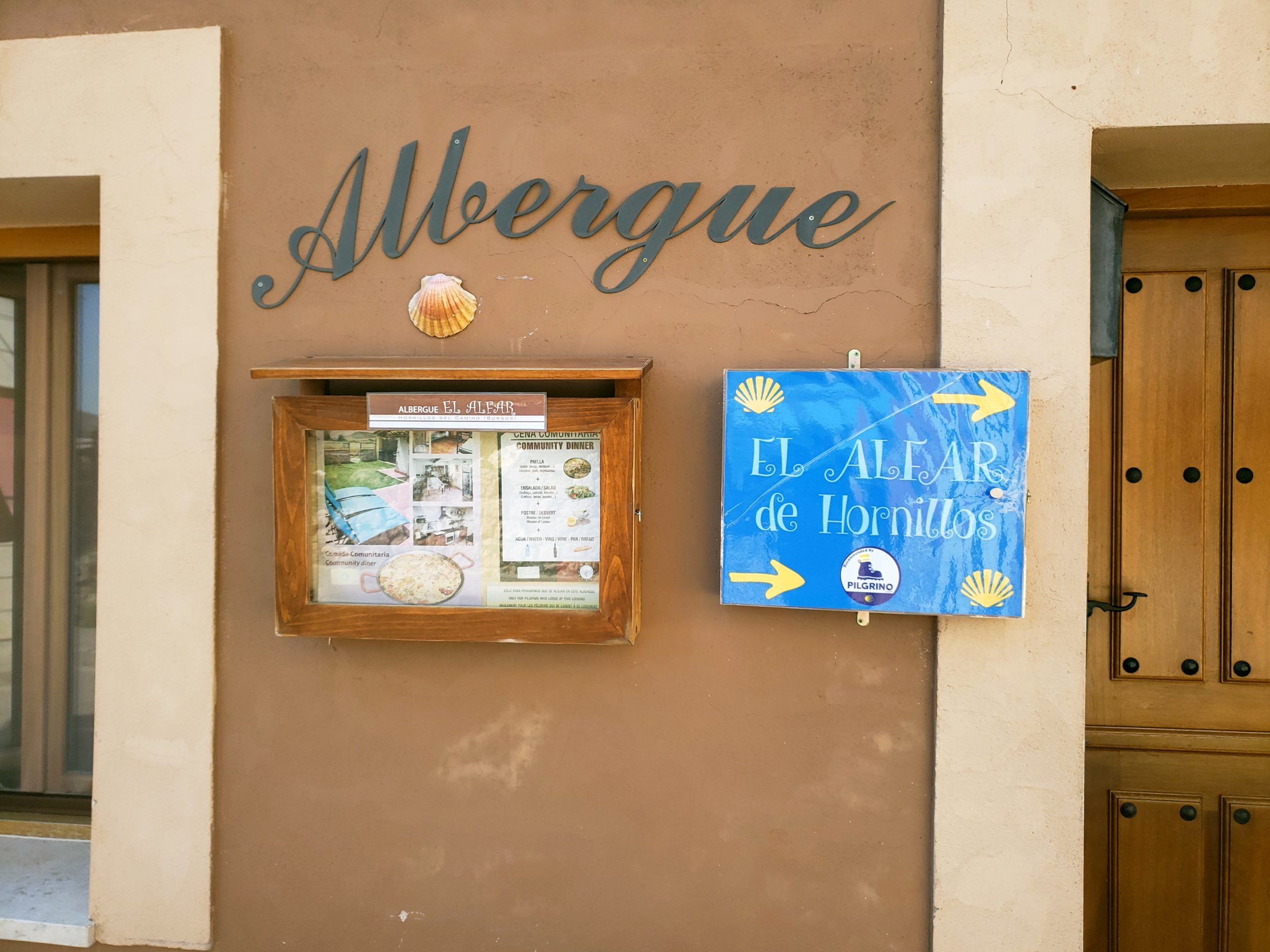
Regardless of the route, it’s important to be prepared for a wide range of weather conditions during the summer months. Make sure to carry sun protection, such as sunscreen and a hat, as well as plenty of water to stay hydrated during your walk.Hornillos in summer

How to transport your luggage on the camino.

There are a few options available:

1. Postal Services: You can send your luggage ahead to your next destination using postal services. You’ll need to arrange this with the post office in the town where you’re staying, and it’s usually not very expensive.

2. Luggage Transfer Services: There are several companies along the Camino that will transport your luggage from one accommodation to the next for a fee. You can arrange this service through your accommodation or directly with the transfer service.

3. Using a Backpack Transfer Service: Some companies specialize in transferring backpacks rather than full luggage. You leave your backpack at a designated location each morning, and it’s transported to your next accommodation.

4. Use a Taxi: In some cases, you can also arrange with local taxi services to transport your luggage to your next stop.

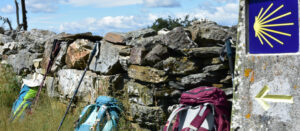
Whichever method you choose, make sure to plan ahead and confirm the availability and pricing of the service. You can typically arrange luggage transport through your accommodation or directly with the transport service.Luggage transfer

Safe Solo Travel on the Camino

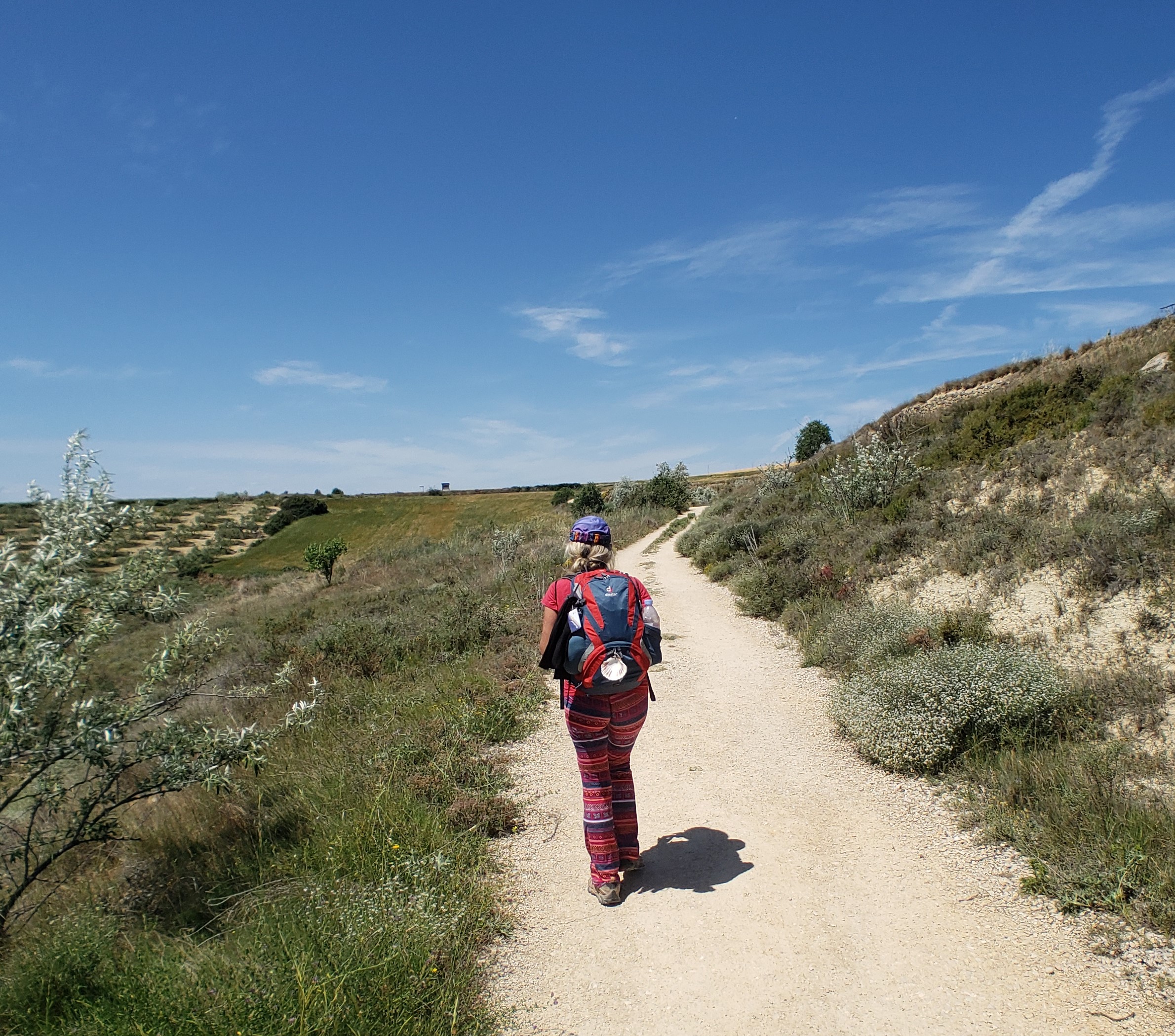
Solo traveller between Los Arcos And LogroñoYes, the Camino de Santiago is generally safe for solo travelers. These famous pilgrimage routes, also known as the Way of St. James, are well-marked and well-traveled by thousands of people every year. There is a strong sense of community and support among pilgrims, which can provide a sense of safety and security.

However, as with any travel, it’s important to take precautions to ensure your safety. Here are some tips to help you stay safe while traveling solo on the Camino de Santiago:

1. Be aware of your surroundings and trust your instincts. If something doesn’t feel right, it probably isn’t.

2. Stay in well-lit, busy areas, particularly at night. Avoid walking alone in isolated areas or dark streets.

3. Keep your valuables secure and out of sight. It’s a good idea to use a money belt or a hidden pocket to keep your money and important documents safe.

4. Use common sense and be cautious when interacting with strangers. While most people on the Camino de Santiago are friendly and helpful, it’s always wise to exercise caution and avoid revealing personal information.

5. Stay connected with others. Let your family and friends know your itinerary, and consider using a tracking app or a buddy system to ensure someone knows where you are at all times.

By following these basic safety guidelines and exercising good judgment, you can have a safe and rewarding experience traveling solo on the Camino de Santiago.

Best landmarks to visit along the Camino de Santiago.


The Camino de Santiago is rich in history and culture, and there are many landmarks and sites to see along the way. Here are some of the best landmarks to visit along the Camino de Santiago:

  1. Cathedral of Santiago de Compostela: This is the final destination of the pilgrimage and is considered the most important landmark on the Camino. The cathedral is a stunning example of Romanesque architecture and is home to the tomb of St. James.
  2. Cruz de Ferro: This is a simple iron cross located atop a hill that is a symbol of the pilgrimage. Pilgrims traditionally leave a stone or other memento at the base of the cross as a symbol of the burdens they are leaving behind.
  3. The Bridge of La Reina: This bridge crosses the River Arga and is a beautiful example of medieval architecture. It is said that pilgrims would cross this bridge in order to receive protection from the Virgin Mary.
  4. The Monastery of San Juan de Ortega: This beautiful Romanesque monastery was founded in the 11th century and is named after a saint who was a key figure in the construction of the Camino.
  5. Burgos Cathedral: This stunning Gothic cathedral is located in the city of Burgos and is one of the most impressive landmarks on the Camino. It is home to a beautiful collection of religious art and is a UNESCO World Heritage site.
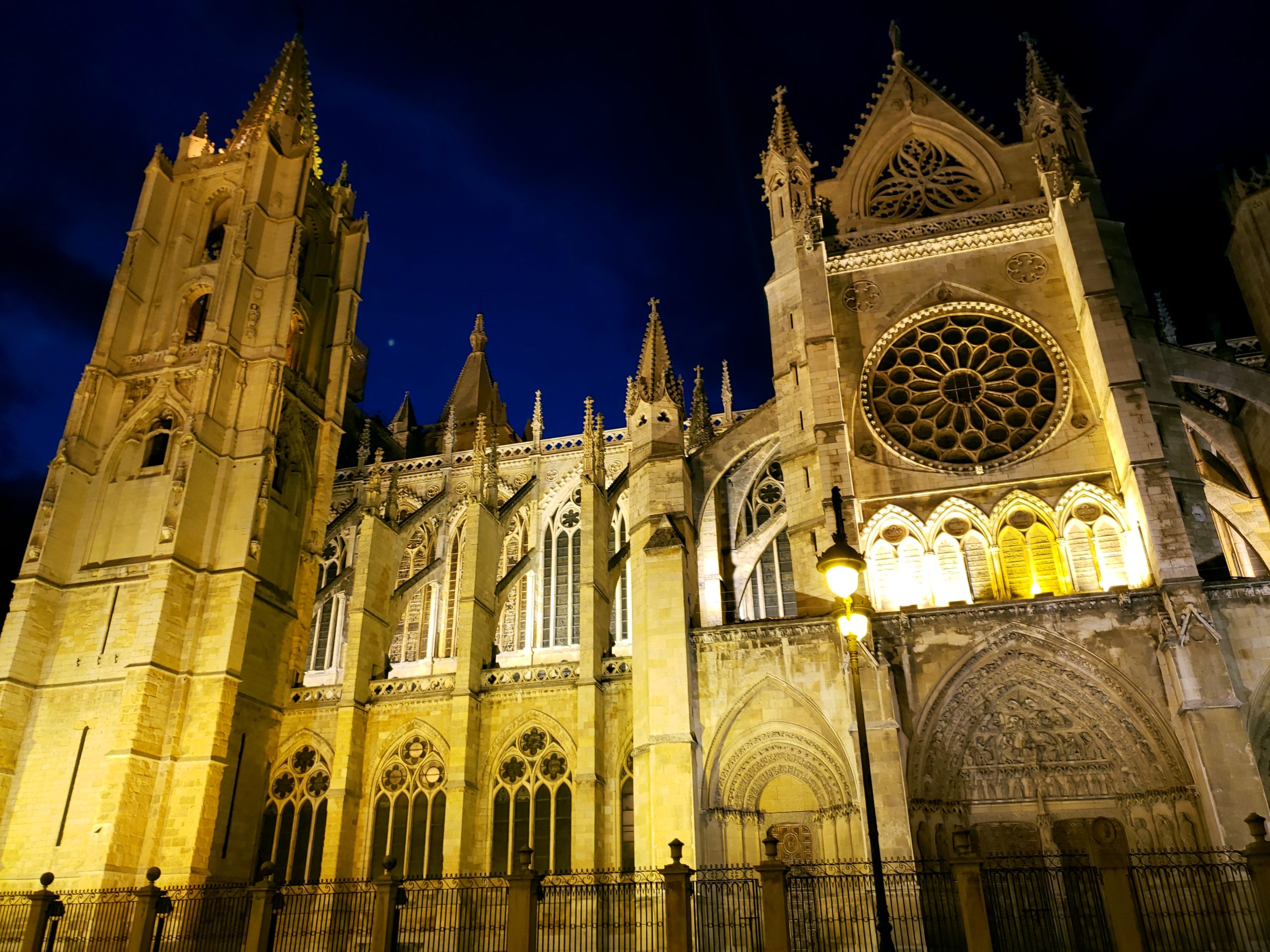
  6. Leon Cathedral: Another beautiful cathedral along the Camino, Leon Cathedral is a stunning example of Gothic architecture and is famous for its stained glass windows.
  7. Pamplona: This city is famous for the running of the bulls, but it is also a beautiful stop on the Camino. The old town is filled with winding streets and charming cafes, and the city is home to a beautiful Gothic cathedral.

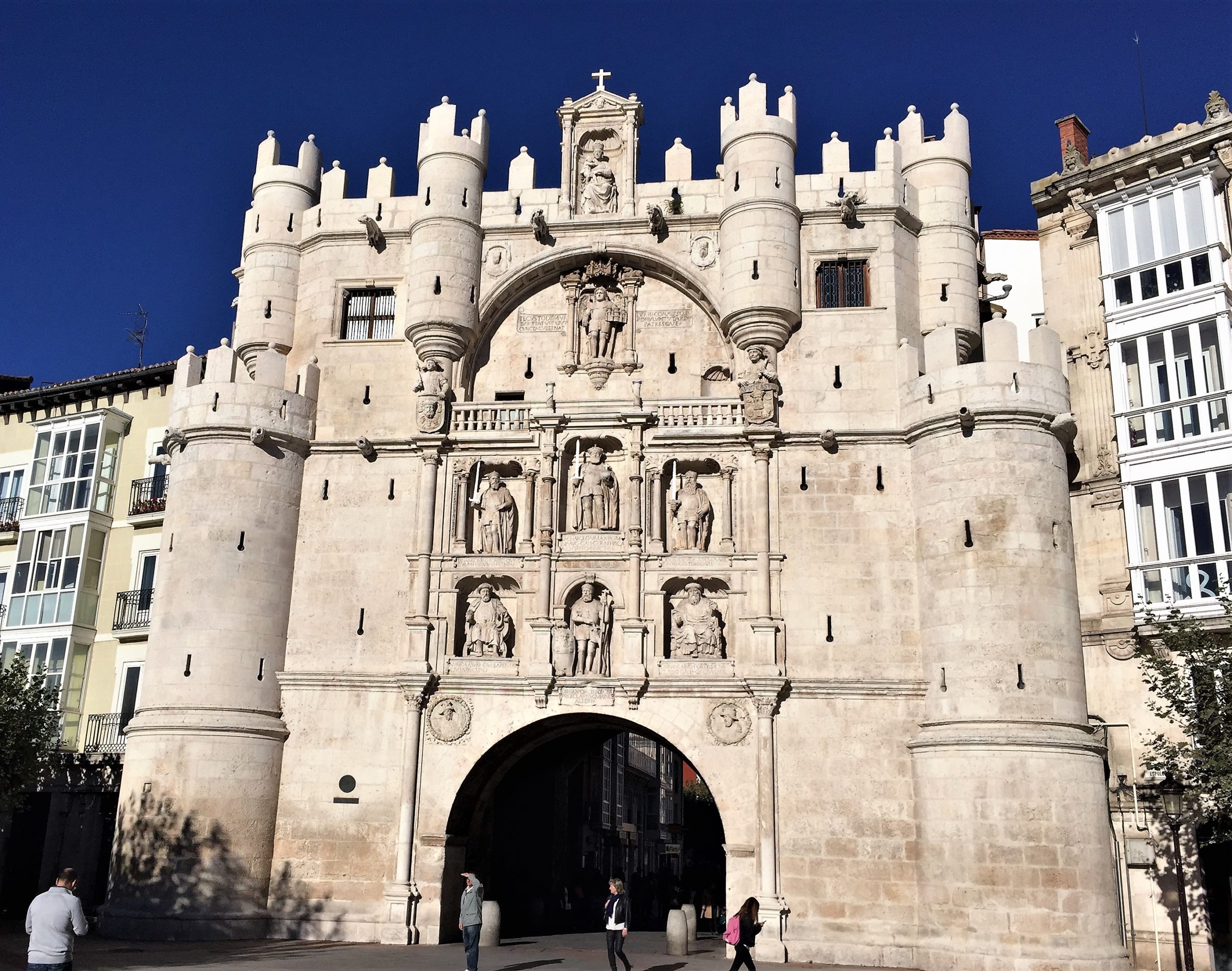
These are just a few of the landmarks to see along the Camino de Santiago. Each day of the pilgrimage is filled with new experiences and discoveries, so be sure to keep an open mind and enjoy the journey.León CathedralArco de Santa Maria Burgos


Where is the best place to start the Camino De Santiago?

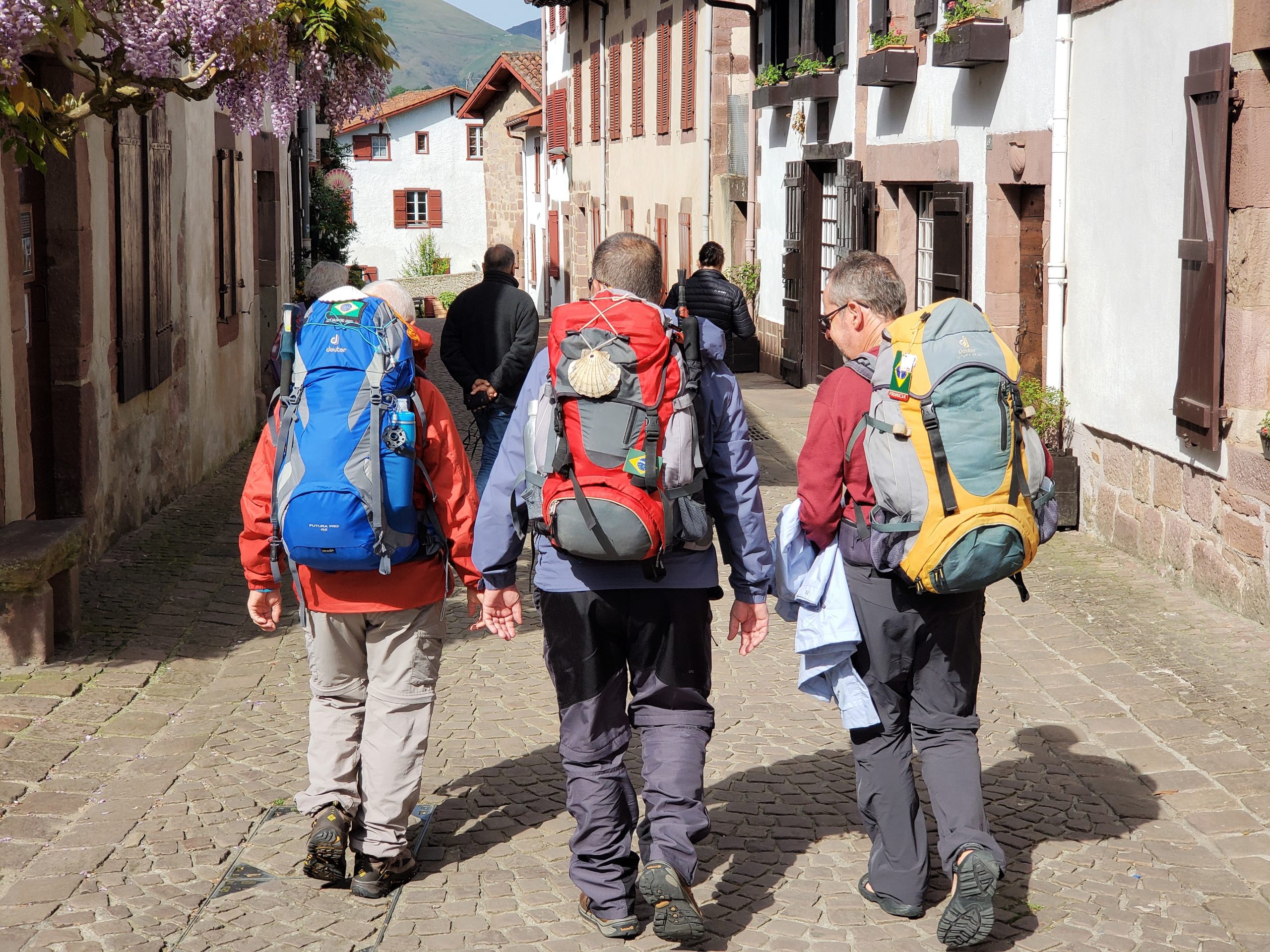
Pilgrims leaving Saint-Jean-Pied-de-Port

The Camino de Santiago is a popular pilgrimage route that spans across several countries and has multiple starting points. The most common and traditional starting point is the French Way, which begins in St. Jean Pied de Port, a small town in the Pyrenees mountains of France.

Starting in St. Jean Pied de Port will allow you to experience the full 800-kilometer journey across northern Spain to Santiago de Compostela. However, if you don’t have enough time or resources, you can choose to start from other points along the route.

Other popular starting points include Roncesvalles, a town on the Spanish side of the Pyrenees, or Sarria, a town in Galicia that is approximately 100 km away from Santiago de Compostela. Sarria is a great option if you’re short on time because completing the final 100 km of the route will still qualify you for the Compostela, a certificate of completion of the pilgrimage.

Ultimately, the best place to start the Camino de Santiago will depend on your preferences, time constraints, and travel logistics. Consider researching different starting points and routes to determine which one aligns best with your needs and interests.

When should you walk the Camino?

Camino fields in springtime outside Grañón.

The best time of year to walk the Camino de Santiago depends on several factors, such as your preferences, weather, and the number of other pilgrims on the trail. The most popular time to walk the Camino is from May to September, but there are pros and cons to each season.

Spring (March to May): The weather is mild, and the landscape is green and lush, but there may still be some rain and cooler temperatures. The trail is also less crowded during this time, making it easier to find accommodations and enjoy a more peaceful pilgrimage.

Summer (June to August): This is the most popular time to walk the Camino, but it can also be the most crowded and hot. The upside is that the days are longer, and there are more social events and pilgrim gatherings along the way.

Fall (September to November): The weather is cooler, and the crowds are thinner, making it a great time to walk the Camino if you prefer a more solitary experience. The fall colors are also beautiful, and the weather is generally mild, but there may be some rain.

Winter (December to February): The Camino is less crowded during the winter months, and you can experience the trail in a different way. However, it can be quite cold and snowy in some areas, and many of the albergues (pilgrim hostels) may be closed.

Ultimately, the best time of year to walk the Camino de Santiago is the time that works best for you and your preferences. It’s a personal journey, and the Camino will provide its own unique experiences, regardless of the season.

Why pilgrims choose albergues.

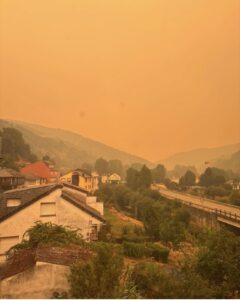
Staying in albergues on the Camino de Santiago is a popular choice for many pilgrims who walk the Camino. There are several reasons why people choose to stay in albergues:

  1. Cost-effective: Albergues are usually the cheapest accommodation option available along the Camino. They typically offer a bed in a shared dormitory room, which is a great option for pilgrims on a budget.
  2. Camaraderie: Staying in an albergue can be a social experience, as you get to meet other pilgrims from around the world. Sharing a dormitory room with other pilgrims can lead to friendships and a sense of community.
  3. Convenience: Albergues are often located in the heart of the towns and villages along the Camino, making them a convenient option for pilgrims who want to rest for the night without straying too far from the trail.
  4. Authentic experience: Staying in an albergue can be a way to experience the traditional pilgrim lifestyle, which has been a part of the Camino for centuries.

Overall, staying in albergues on the Camino de Santiago can be a unique and memorable experience, offering budget-friendly accommodation, social connections, and a sense of tradition and history.