
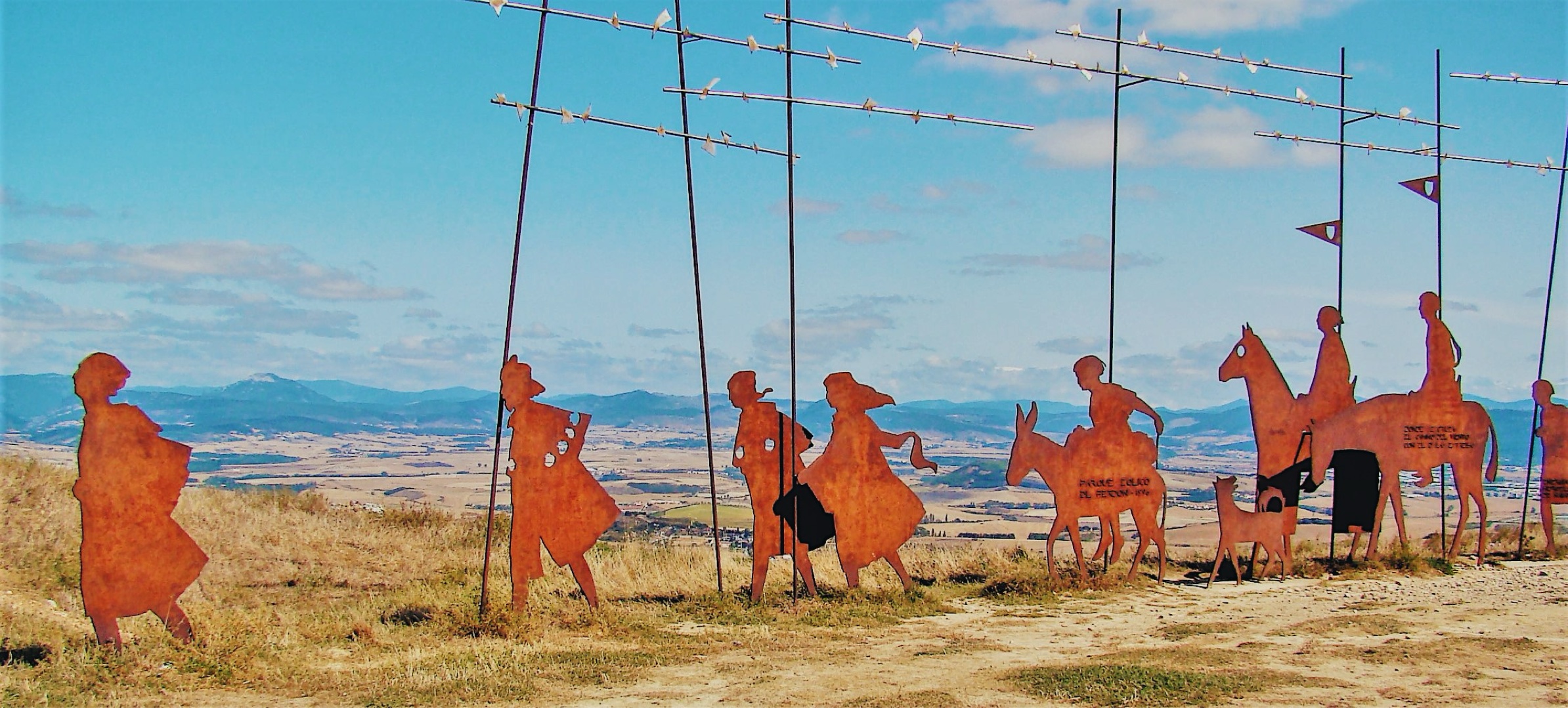
Just outside Pamplona, the Camino Francés climbs its first real hill — and at the top stands one of the road’s most photographed sights: a line of life-sized bronze pilgrims, bent into the wind, crossing a ridge dotted with modern wind turbines. The Alto del Perdón. The Hill of Forgiveness.
The name is older than the sculpture. Medieval pilgrims climbed here seeking pardon, and the wind at the top has not changed — it funnels through the pass with real force, tugging at packs and hats, as if testing resolve. The bronze figures lean into it forever, mid-stride, in a line that stretches across centuries: the medieval pilgrim with staff and gourd beside the modern one with trekking poles.
From the summit, the view opens both ways — back toward Pamplona’s rooftops, forward into the long rolling country toward Puente la Reina. It is the first moment on the Francés when the Camino shows its scale: this is a long road, and you have only just begun. Take the photo everyone takes. Then walk down the other side, where the real journey starts.
A PRACTICE FOR THE DESCENT
The downhill from the Perdón is steep and stony — go slowly, protect the knees, and let the faster pilgrims pass. The Camino is not a race, starting here.