When to Stop Walking

Praza do Obradoiro, Santiago de Compostela

The hardest decision on the Camino is not whether to start. It is whether to stop — for a day, or for good.

Every pilgrim meets the moment: the knee that has been whispering starts shouting, the blister becomes something angrier, the exhaustion stops lifting overnight. The road culture celebrates perseverance, and quitting feels like failure. So pilgrims limp on, turning a three-day rest into a three-week injury, because stopping feels like betraying the journey.

Here is the reframe the veterans offer: rest is not quitting. A rest day in a beautiful town — León, Burgos, Pontevedra — is part of the pilgrimage, not an interruption of it. The Camino has been there for a thousand years; it will wait one more day. And if the body says the journey is over, honor that too. A Camino cut short by wisdom is worth more than one finished on a ruined knee.

The road teaches many things. One of them is the difference between persistence and punishment. Learn it early, and your Camino — however long — will be the right length.

A PRACTICE FOR THE WEEKS BEFORE

Decide now, before you go, what your stop signals are: which pains mean rest, which mean a doctor, which mean going home. Deciding in advance makes it easier to honor later.

The Pilgrim’s Menu

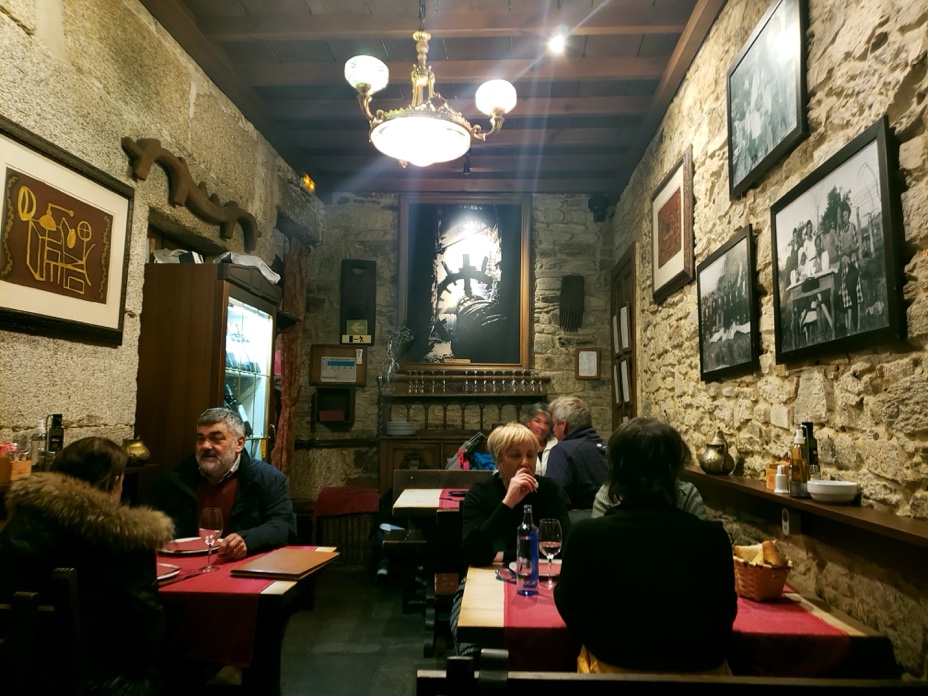
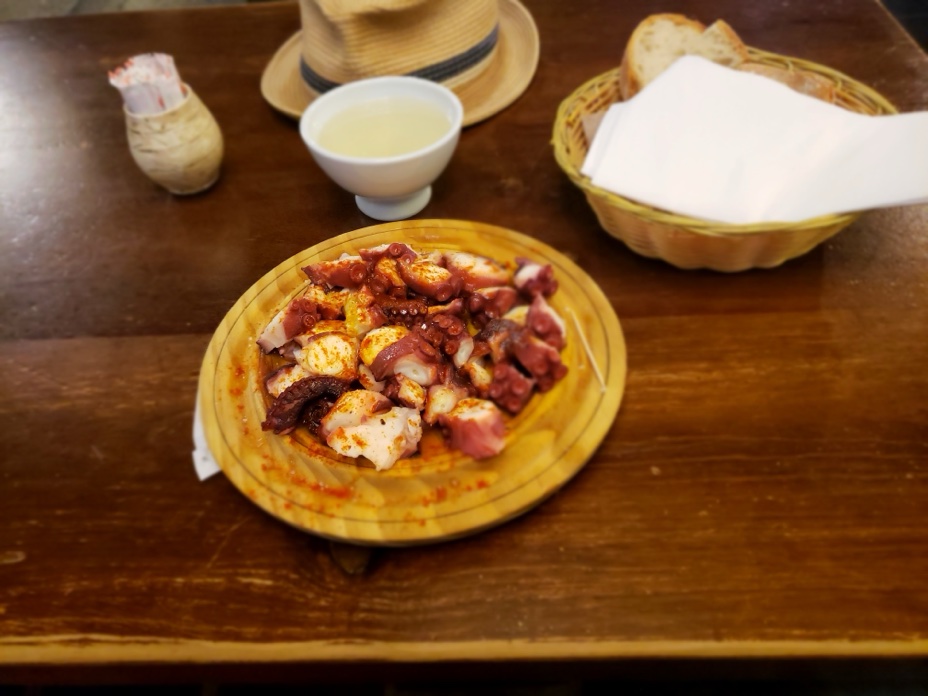
Every evening in towns along the Camino, restaurant doors display the same beloved sign: menú del peregrino. The pilgrim’s menu. Three courses, bread, wine, often under fifteen euros — the great refueling ritual of the road.

The formula is comfort itself. First course: soup or salad or pasta, something restorative. Second: the sustaining plate — chicken, pork, hake, whatever the region does best. Dessert, then coffee, then the particular drowsiness of the well-fed walker. The wine is local and unlimited in the way that matters. Vegetarians learn to ask; everyone learns to arrive hungry.

But the menú del peregrino is more than cheap calories. It is where the day’s walking gets processed — the table where Camino families debrief the kilometers, compare blisters, and plan tomorrow over the second glass. Some of the longest friendships on the road were founded not on the trail but across these oilcloth tablecloths, in the golden hour between arrival and sleep.

FOR YOUR JOURNAL

What was your best pilgrim’s menu — and who was sitting across from you?

The First Three Days

Almost every pilgrim makes the same mistake: walking too far, too fast, in the first three days.

The excitement of the start is a liar. Adrenaline masks fatigue, the pack feels light, the other pilgrims are striding out — and so you walk 28 kilometers on day one, 30 on day two, and on day three your knees file a formal complaint. The Camino’s injury statistics tell the story: most pilgrims who quit do so in the first week, felled not by the road but by enthusiasm.

The veterans’ rule is boring and golden: short days to start. Fifteen to twenty kilometers, no more, for the first three days — however fit you feel. Let the body learn the rhythm before you ask it for distance. Walk the morning, arrive by early afternoon, rest, stretch, eat well. The fitness will come; the Camino is six weeks long if you want it to be, and there is no prize for arriving in Santiago exhausted.

Think of the first three days as a conversation with your body, not a conquest of it. Ask how it is doing. Listen to the answer. Adjust.

A PRACTICE FOR THE START

Plan your first three stages now — and make each one shorter than your pride suggests. Your knees will thank you in León.

The Dogs of the Camino

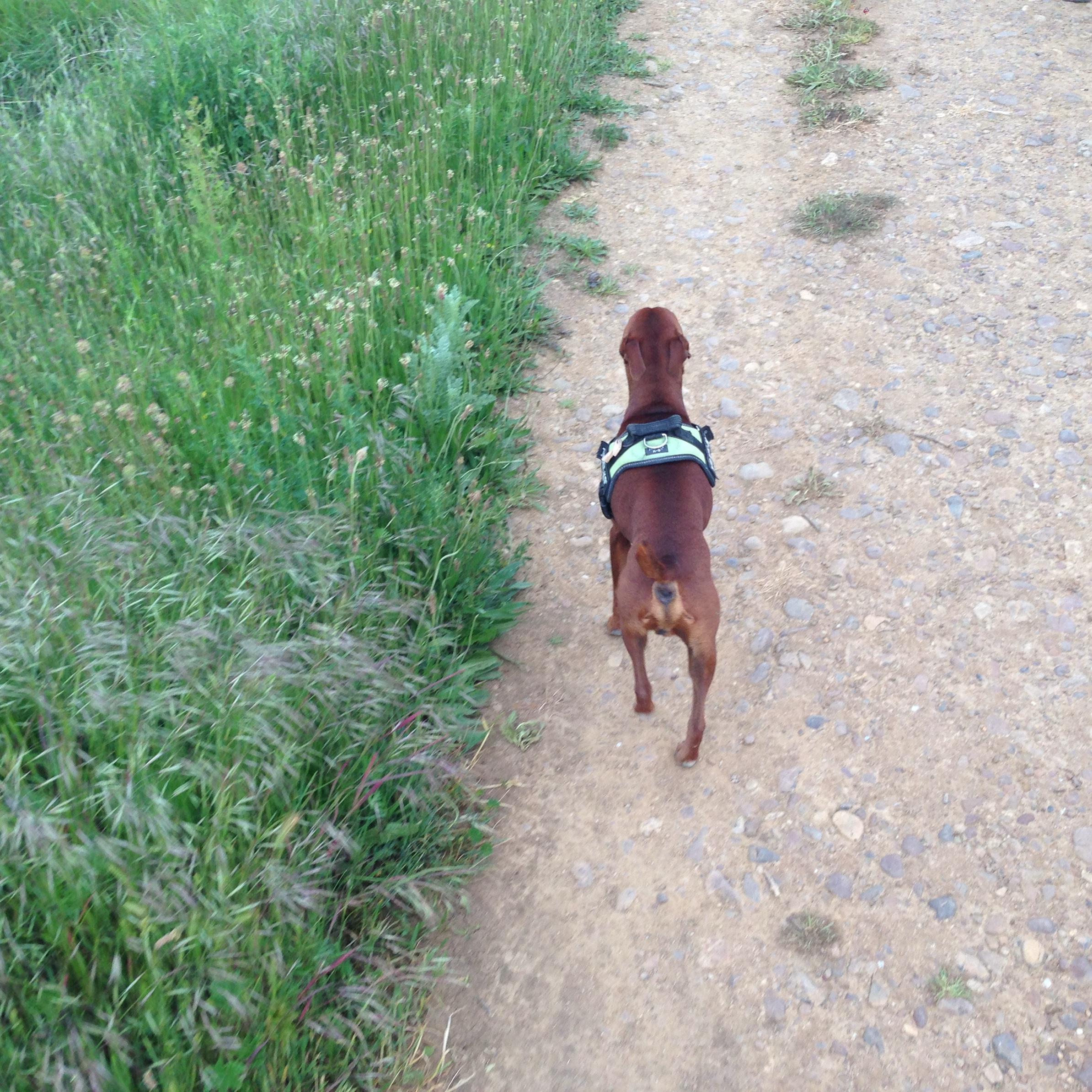
Every season, a few dogs walk the Camino — and become legends.

There is a long tradition of it: village dogs that adopt a pilgrim for a stage or ten, trotting alongside with total commitment, then peeling off at some invisible boundary only they understand. Albergues tell stories of the same dog appearing in guestbooks year after year, under different pilgrims’ names. And then there are the pilgrims who bring their own dogs the whole way — with booties for hot pavement, rest days negotiated around paws, and a bond the trail deepens beyond words.

The dogs remind everyone of something the pilgrims keep forgetting: how to be fully where you are. A dog does not worry about Santiago. A dog is interested in this field, this smell, this moment, this person. Watch a Camino dog for an afternoon and you have had the masterclass — presence, joy, loyalty, and rest when rest is needed.

FOR YOUR JOURNAL

What would your Camino look like if you walked it the way a dog does — entirely in this moment?

The Camino Portugués: The Quiet Way

While the Francés carries the crowds, the Camino Portugués walks quieter — north from Porto through a gentler landscape of vineyards, river valleys, and whitewashed villages, crossing into Spain at the Minho river and joining the final stretch to Santiago.

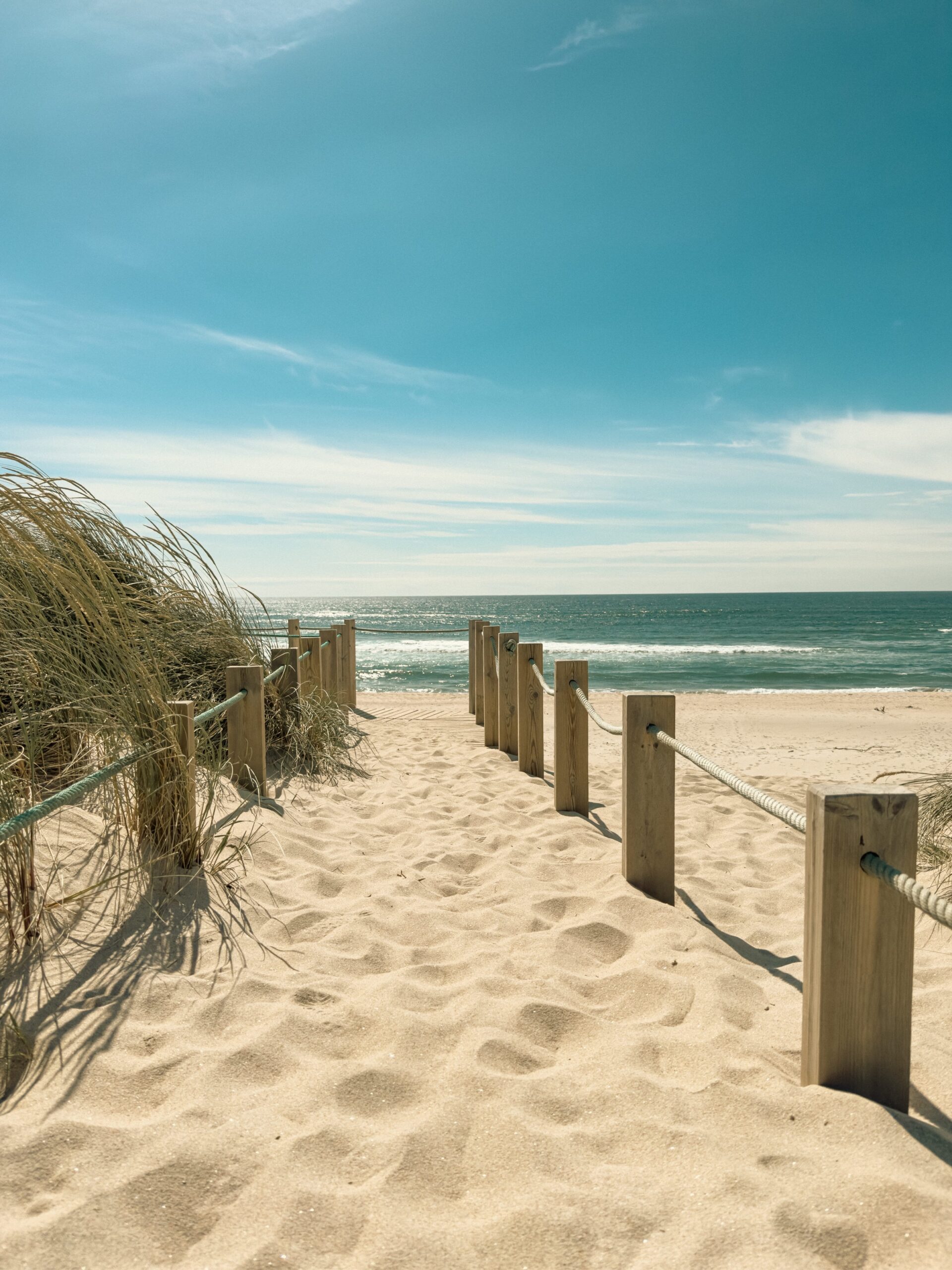
There are two great variants, and pilgrims argue lovingly about them. The Central route runs inland through Barcelos and Ponte de Lima, all green valleys and Roman bridges. The Coastal route follows the Atlantic from Vila do Conde, with sea wind, boardwalks, and fishing towns — wilder, newer, and increasingly loved. Both converge at Redondela, and both deliver you to Santiago with salt still in your pack, one way or another.

What distinguishes the Portugués is its gentleness. The stages are shorter, the climbs kinder, the waymarking generous. It is the Camino many walkers choose for a first pilgrimage — or for the one after the hard one, when the point is not to conquer anything but to walk well, eat well, and arrive grateful.

A PRACTICE FOR THE CHOOSING

If you are choosing between routes: the Francés for the classic, the Norte for the wild, the Portugués for the gentle. There is no wrong answer — only the road you are ready for.

What the Rain Washes Clean

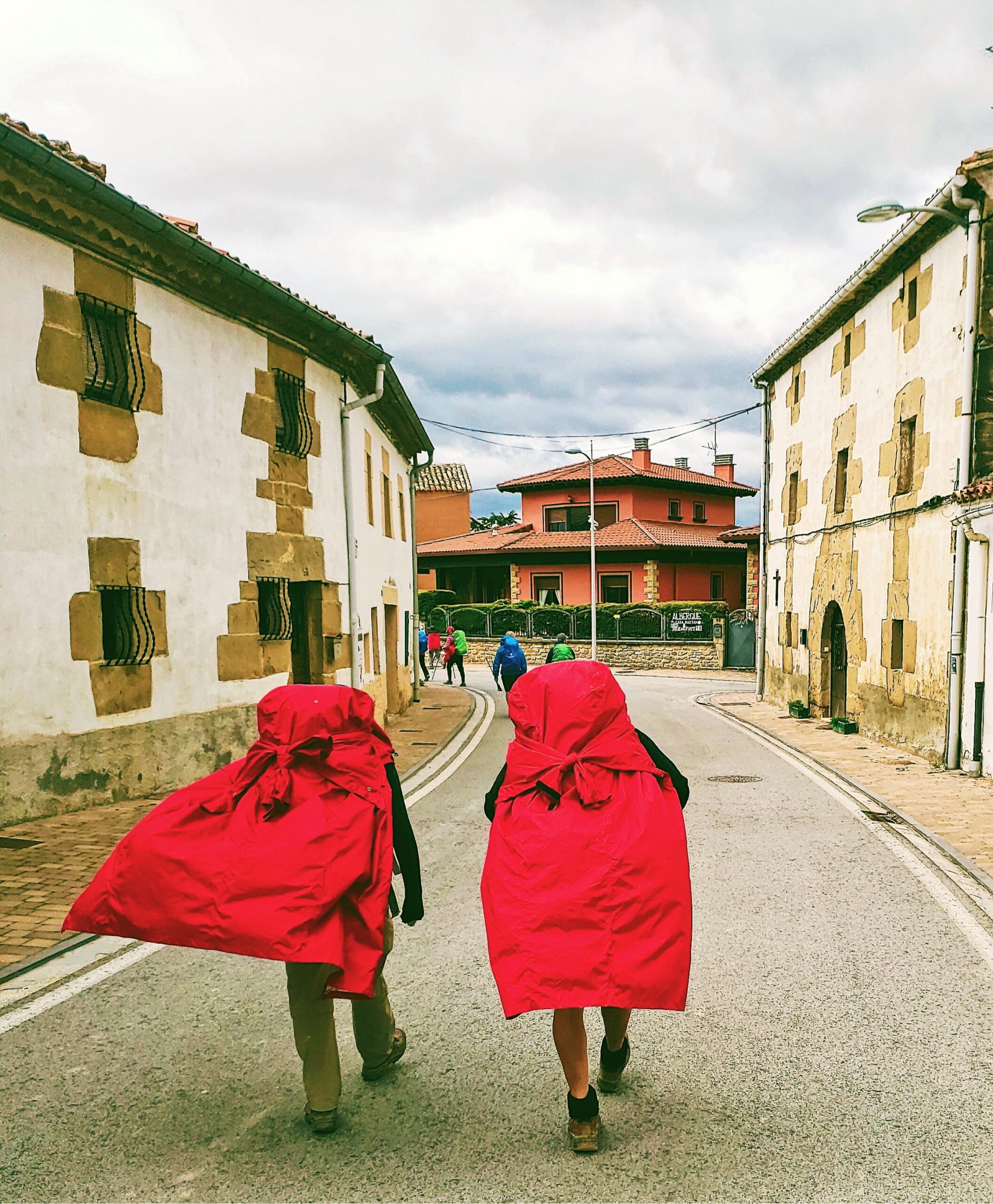
Sooner or later, the Camino rains on you. Not a cinematic drizzle — real, sideways, boot-filling rain, the kind that starts at breakfast and is still going at dinner. Every pilgrim meets it. The question is what you do with it.

The first instinct is resistance: the rain is ruining the day, the plan, the mood. But somewhere around the tenth kilometer of steady rain, something shifts for many walkers. The resistance costs more energy than the rain does. You stop fighting it. The hood goes up, the pace steadies, and the world narrows to the path, the sound, the breathing. Pilgrims describe these as some of their clearest hours — the mind rinsed quiet, the way the landscape is.

There is an old saying on the road: there is no bad weather, only bad equipment. It is true, and it is also incomplete. The deeper truth is that the rain washes more than the trail. Grievances feel smaller when you are soaked through. Gratitude gets simpler — a dry café, a hot soup, a radiator. Walk far enough in the rain and you start to suspect it was never the enemy. It was the teacher you didn’t order.

A QUESTION TO CARRY

What in your life are you still resisting that might, accepted, become the teacher?

Sleep Like a Pilgrim

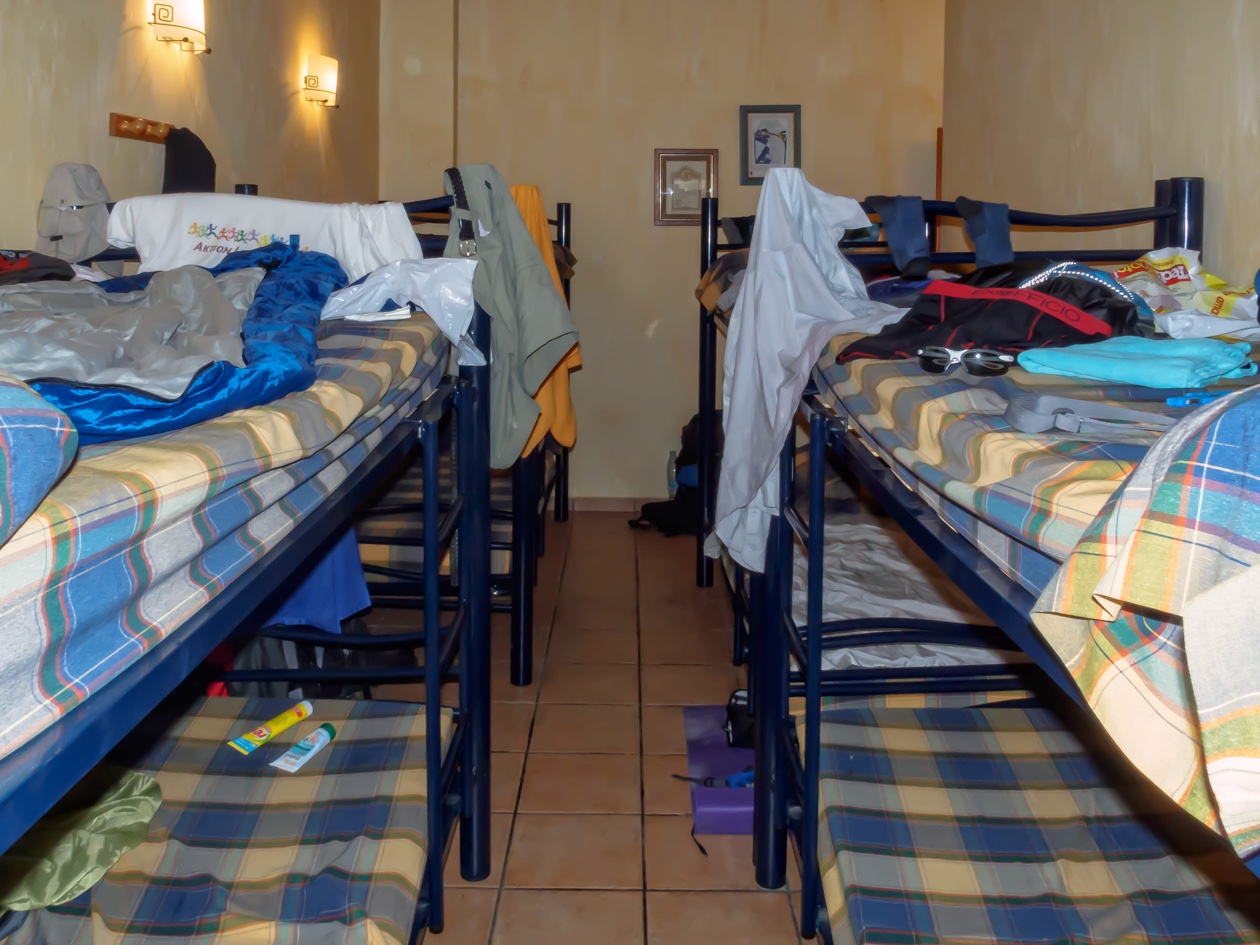
Bunks in an albergue dormitory

Nobody warns you about the snoring. They should.

Albergue dormitories are one of the Camino’s great equalizers — thirty bunks, one lights-out, and a symphony of human sleep in every key. The preparation is simple and non-negotiable: earplugs, an eye mask, and a headlamp with a red-light mode so you don’t blind the dormitory on a midnight bathroom run. These three small things will do more for your pilgrimage than any upgrade to your pack.

But there is an etiquette beyond the gear, and it matters. Pack your bag the night before so the 5 a.m. departure doesn’t sound like a rockfall. Keep the phone on silent and the screen dim. If you snore thunderously, consider the bunk farthest from everyone — or the private room, taken without shame. The dormitory is a commons, and the Camino’s golden rule applies: leave every shared space — including the shared silence — better than you found it.

Done well, dormitory sleep becomes its own small practice: surrendering control, trusting strangers, resting in a room full of breathing. It is not the sleep you are used to. That is rather the point.

A PRACTICE FOR THE WEEKS BEFORE

Sleep one night with earplugs and an eye mask before you go. If you can rest through unfamiliar noise at home, the dormitory holds no terrors.

The Albergue Door

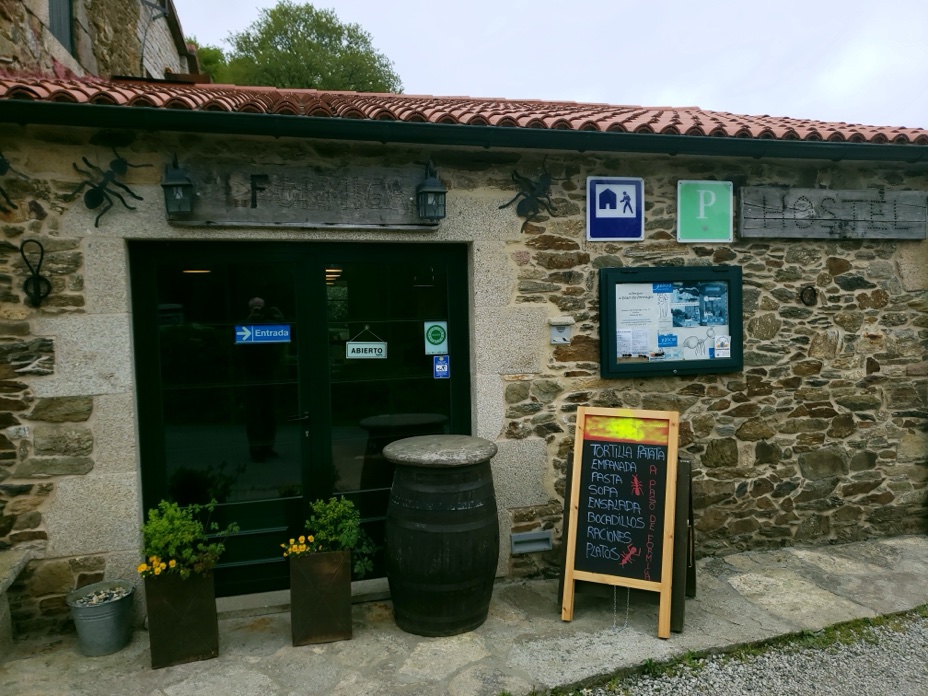
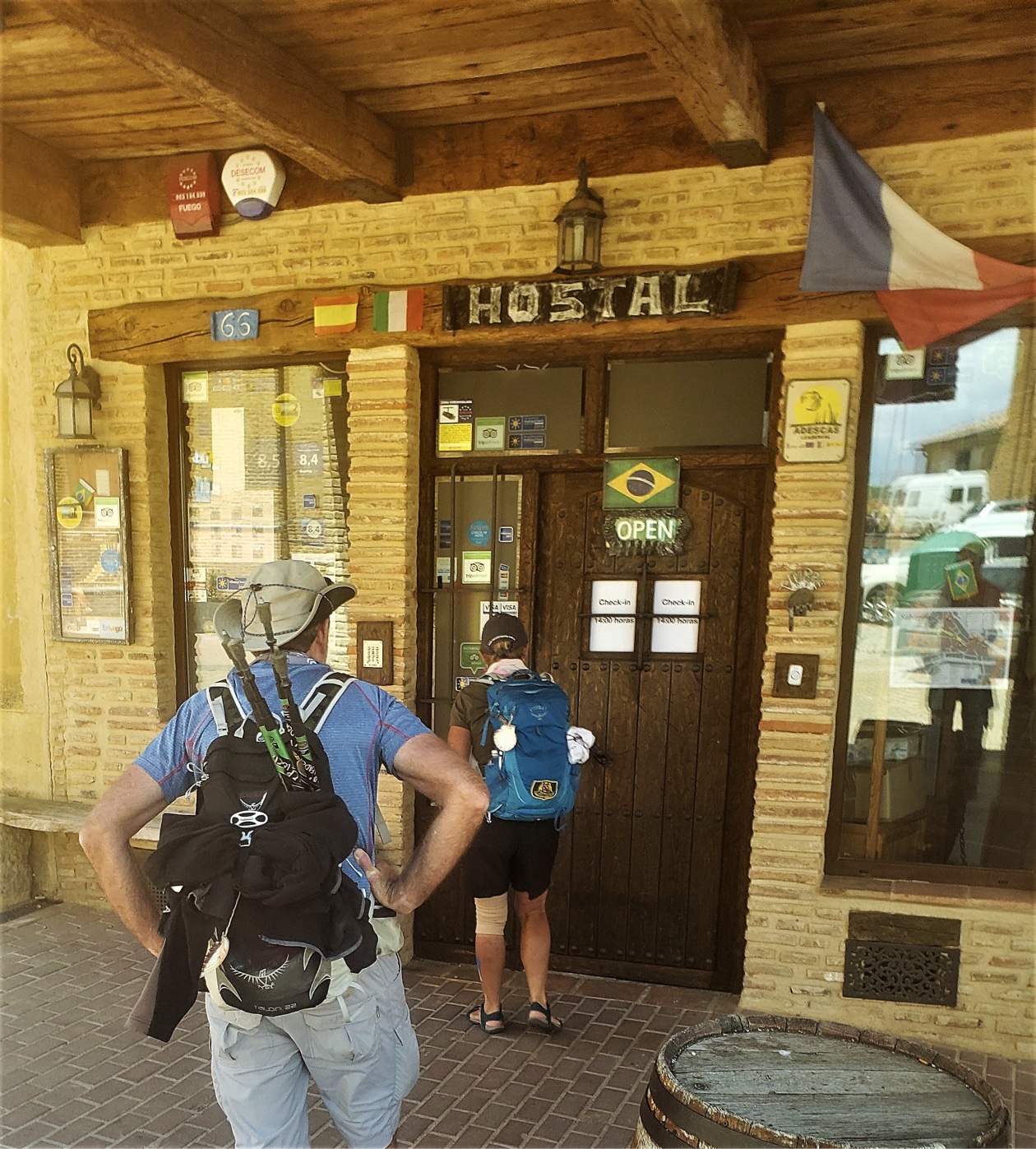
The door of an albergue hostel on the Camino

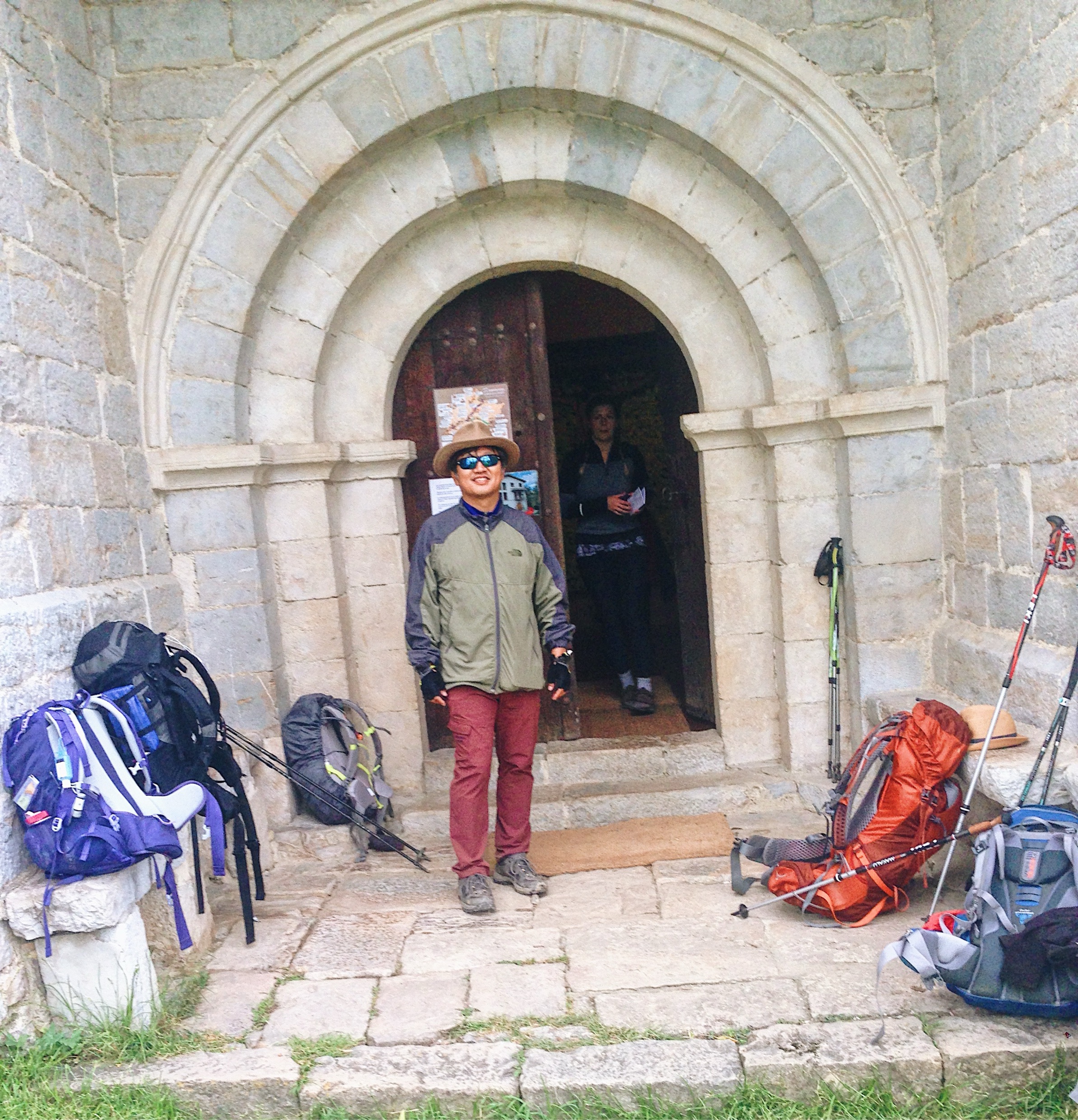
Every afternoon on the Camino ends the same way: at a door.

The packs come off first, lined up against the wall like tired soldiers. Then the boots, then the poles, leaning in the corner. Inside: the stamp for the credencial, the assignment of bunks, the blessed shower. It is the same small ritual in every town, and it never gets old — because the door means you made it. Another stage, another twenty-some kilometers, survived.

There is a particular feeling to that doorway hour. The day’s walking is done but the evening hasn’t started; pilgrims mill about in the strange in-between, comparing notes on the trail, icing knees, hanging laundry on every available rail. Strangers from the morning’s café become bunk neighbors. The Camino family, if you have one, reassembles by unspoken agreement. Nobody planned it. The door did the planning.

The albergue door is the Camino’s daily punctuation — a full stop at the end of each day’s sentence. Walk, arrive, rest, repeat. The rhythm is so simple it feels ancient, and it is: pilgrims have been ending their days at doors like this one for a thousand years.

FOR YOUR JOURNAL

What did your arrival ritual look like — and what did the door at the end of each day give you that the trail didn’t?

Santiago: The Arrival

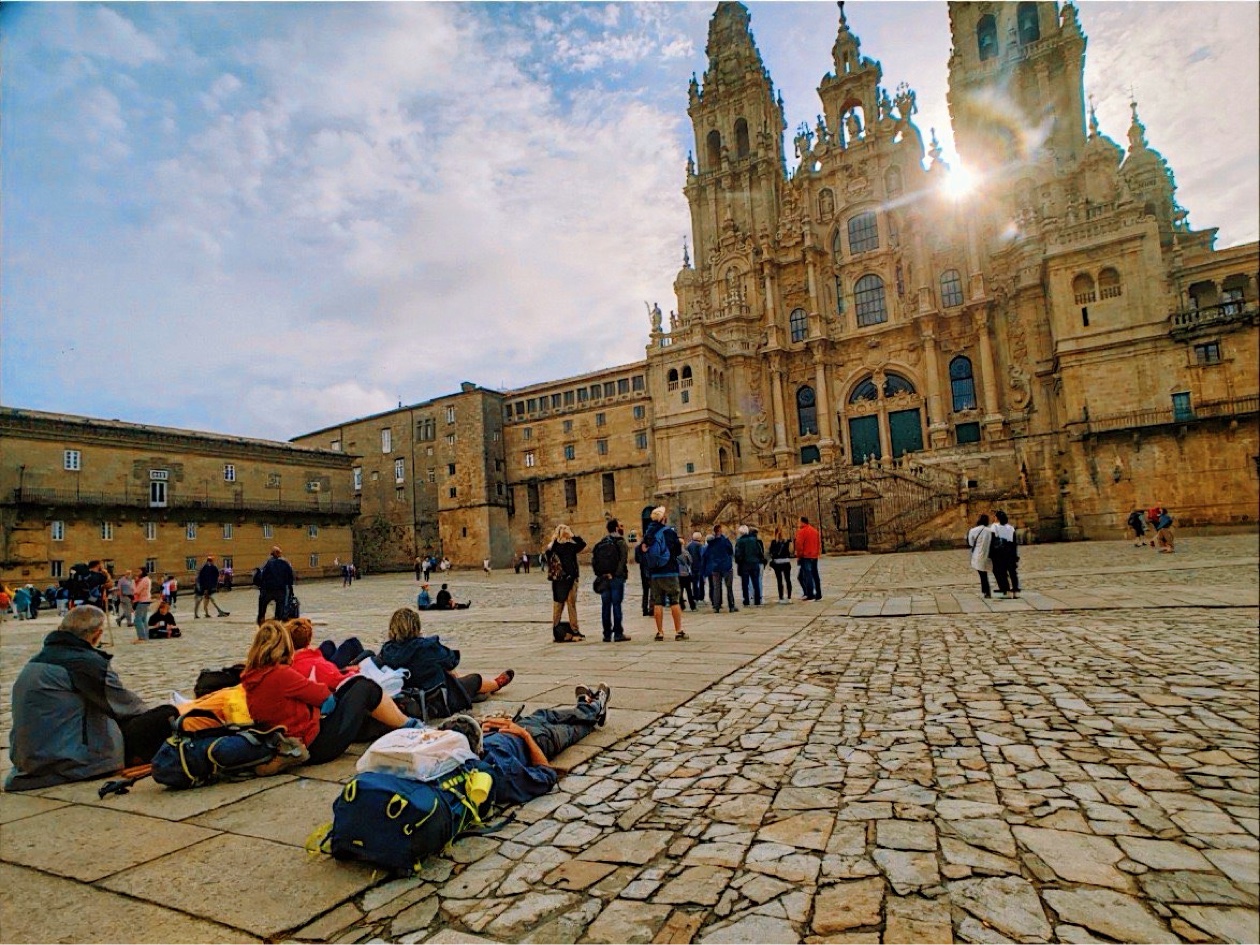
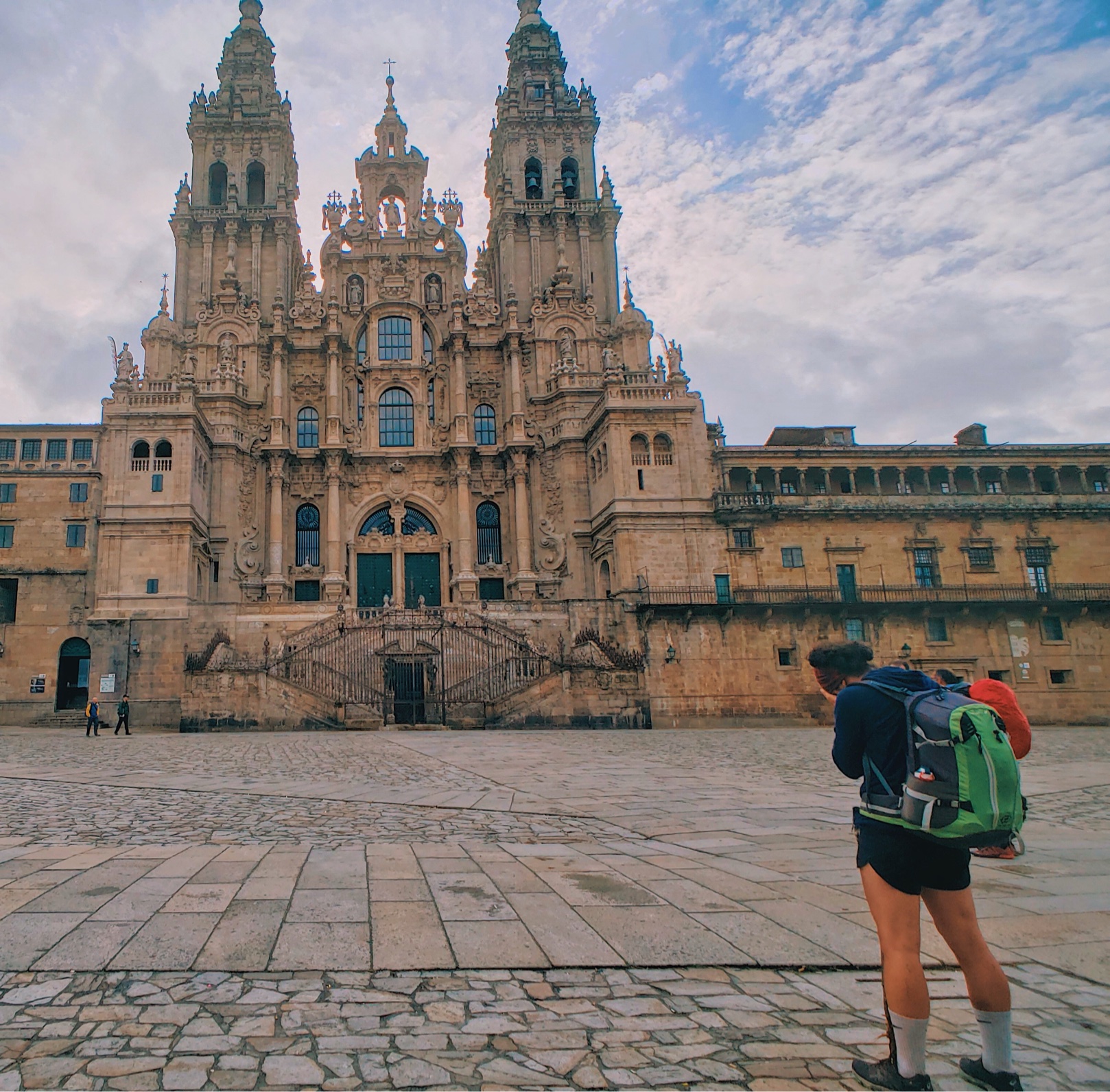
Pilgrims arriving in the Praza do Obradoiro in front of Santiago Cathedral

After all the kilometers, it ends — or begins — in a square. The Praza do Obradoiro opens suddenly at the end of a narrow street, and there is the cathedral facade, baroque and golden, with bagpipes often playing somewhere out of sight. Pilgrims arrive weeping, laughing, limping, or all three at once.

The rituals of arrival are old and specific. You lay your hands on the statue of Saint James behind the altar — the embrace pilgrims have made for centuries. You visit the tomb in the crypt below. If you are lucky, you witness the botafumeiro: the giant incense burner, swung by eight men on a rope, arcing across the transept in a plume of smoke. It was designed to fumigate medieval pilgrims. It still takes the breath away.

But ask finishers what the arrival felt like, and many will say the strangest thing: anticlimax, mixed with the joy. The goal you walked toward for weeks is suddenly behind you, and the road ahead is ordinary life. That hollow, spacious feeling is not the end of the pilgrimage. Most pilgrims will tell you it is the beginning of the real one — the walk home, carrying whatever Santiago gave you.

A PRACTICE FOR THE ARRIVAL

When you reach the square, sit down before you do anything else. Let the arrival land before you start documenting it.

Walking the Camino in Winter

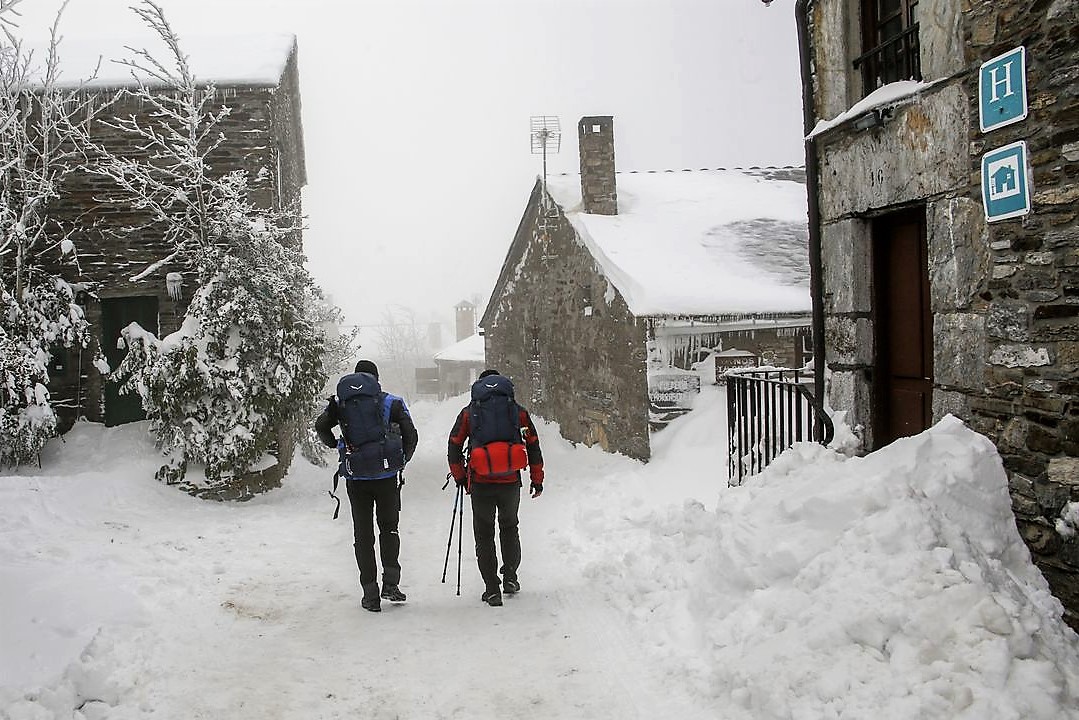
Winter Camino

Most pilgrims walk in May or September, when the days are long and every albergue door along the way stands open. A smaller number walk in winter — and many of them will tell you, quietly, that they would not trade their winter Camino for any other.

Winter changes the terms of the walk. That is the first thing to understand, and for the right pilgrim it is not a warning. It is the invitation.

The quiet road

In summer the Francés can feel like a procession: a steady current of walkers, full cafés, a race for beds by early afternoon. In winter the current slows to a trickle. You may walk a whole morning stage and meet a handful of people. The ones you do meet, you meet properly — there are so few of you that every encounter becomes a conversation, and the small company of winter pilgrims who gather around an albergue stove in the evening has a warmth the crowded season rarely matches.

The land shows a different face, too. Frost on the meseta at first light. Snow on the Montes de León and, sometimes, on the climb to O Cebreiro. Bare vines in La Rioja, woodsmoke over Galician villages, storks gone and the bells sounding all the clearer for the empty air. The Camino’s old churches and monasteries were built for centuries in which most travel was slow and most of it was cold; in winter, the road feels closer to the one the first pilgrims knew.

What winter asks of you

Honesty matters here, because winter is not simply the summer Camino with a coat on.

The days are short. In December and January you have perhaps nine hours of light, and the rhythm of the walk changes with them: earlier starts are pointless in the dark and the cold, stages run shorter, and there is a particular pleasure in arriving while there is still afternoon left for washing, resting and a hot meal. Distances that feel easy in June deserve more respect in January.

The cold is real but manageable, and it is rarely the hardest part. Wind on the open meseta and rain in Galicia test a pilgrim more than low temperatures do. Good layers, genuinely waterproof boots and a warm sleeping bag matter more than any single expensive garment. Snow can close the high passes for a day or two at a time — the Napoleon route over the Pyrenees is not a winter route, and the Valcarlos valley is the way through — and the wise winter pilgrim builds in spare days and treats a weather-enforced rest as part of the pilgrimage rather than an interruption of it.

And some of the infrastructure of the summer Camino simply goes home. Village bars keep shorter hours or close entirely. A fountain you remember from a spring walk may be the only company at a crossroads where, in August, there was a food truck. Winter walking rewards a pilgrim who plans the day in the morning — where to eat, where to stop — instead of assuming the road will provide at every hour.

Where winter pilgrims walk

Winter walkers are found on several routes, but the great majority are on the Camino Francés. It carries roughly half of all pilgrims across the year and an even larger share in the cold months, because it has the deepest network of villages, services and beds to draw on when so much else has closed. The Portugués sees a gentle winter trickle, milder in weather but thinner in open accommodation. For most first-time winter pilgrims, the Francés is the sound choice — and for those who cannot give a winter month to the road, its last hundred kilometres, from Sarria to Santiago can be walked in five or six days and make a complete winter pilgrimage in miniature: quiet Galician lanes, eucalyptus and chestnut woods, and a Compostela earned in the season when Santiago itself is at its most beautiful and least crowded.

The real question: where will you sleep?

Ask a returning winter pilgrim what actually required planning, and the answer is rarely the weather. It is beds.

From November to February, a large share of albergues on the Francés close for the season — owners rest, buildings are repaired, and villages that host hundreds of pilgrims a night in summer may have a single open door, or none. A bed cannot be assumed from one stage to the next the way it can in May. The winter pilgrim’s essential discipline is simple: know, before you set out in the morning, where you will sleep that night — and ideally the night after.

That is why we keep a list. Working from the winter list published each year by APRINCA, the association of winter albergue hosts, we maintain a stage-by-stage record of the albergues open in winter on the Camino Francés — 86 albergues for the winter of 2026–27, with their closure dates and booking rules noted on each property’s page as well. It is the single piece of planning a winter walk cannot do without, and it exists because the hospitaleros who stay open through the cold months deserve pilgrims who arrive prepared rather than surprised.

A few working rules, learned from the list and the road:

  • Book or phone ahead in winter, even if you never would in summer. Many winter albergues open for whoever has called; some keep a door closed on days when nobody is expected.
  • Respect the closure dates. Several albergues close for a week or two around Christmas and New Year, or for set days each week — the list notes them, stage by stage.
  • Carry the next option, not just the plan. If your intended albergue is full, closed or simply dark, knowing the following village’s open bed before you leave in the morning turns a crisis into a longer walk.
  • Shorten the stage, lengthen the welcome. Winter pilgrims are few, and hospitaleros remember them. Arriving unhurried, in daylight, is both safer and better manners.

Is winter for you?

Winter is not the Camino with the difficulties removed; it is the Camino with the distractions removed. There is less choice, less noise, less company — and, many winter pilgrims find, more of the thing they came for. If you are drawn to the road as an inward journey as much as an outward one, if you can plan a bed ahead and dress for honest weather, and if the thought of a near-empty trail under a low winter sun sounds less like a hardship than like a gift, then the quiet season may be your season.

The beds are there. Fewer of them, warmer for being chosen. You only have to know where they are before you set out.

Winter albergues: the direct answers

Which albergues are open during the winter on the Camino de Santiago?

There is no single year-round network — from November to February many albergues close, and the ones that stay open are concentrated on the Camino Francés, where most winter pilgrims walk. For winter 2026–27, 86 albergues on the Francés are listed as open, stage by stage, in our albergues open in winter on the Camino Francés list, drawn from APRINCA, the association of winter albergue hosts. On other routes, notably the Portugués, far fewer beds stay open, so check and phone ahead for every night rather than assuming a bed in the next village.

How do I find a bed in winter?

Know before you set out in the morning where you will sleep that night — and ideally the night after. Book or phone ahead even if you never would in summer, respect the closure dates noted for each albergue (several close for a week or two around Christmas and New Year), and carry the next village’s open option as your fallback.

Buen Camino — in every season.