
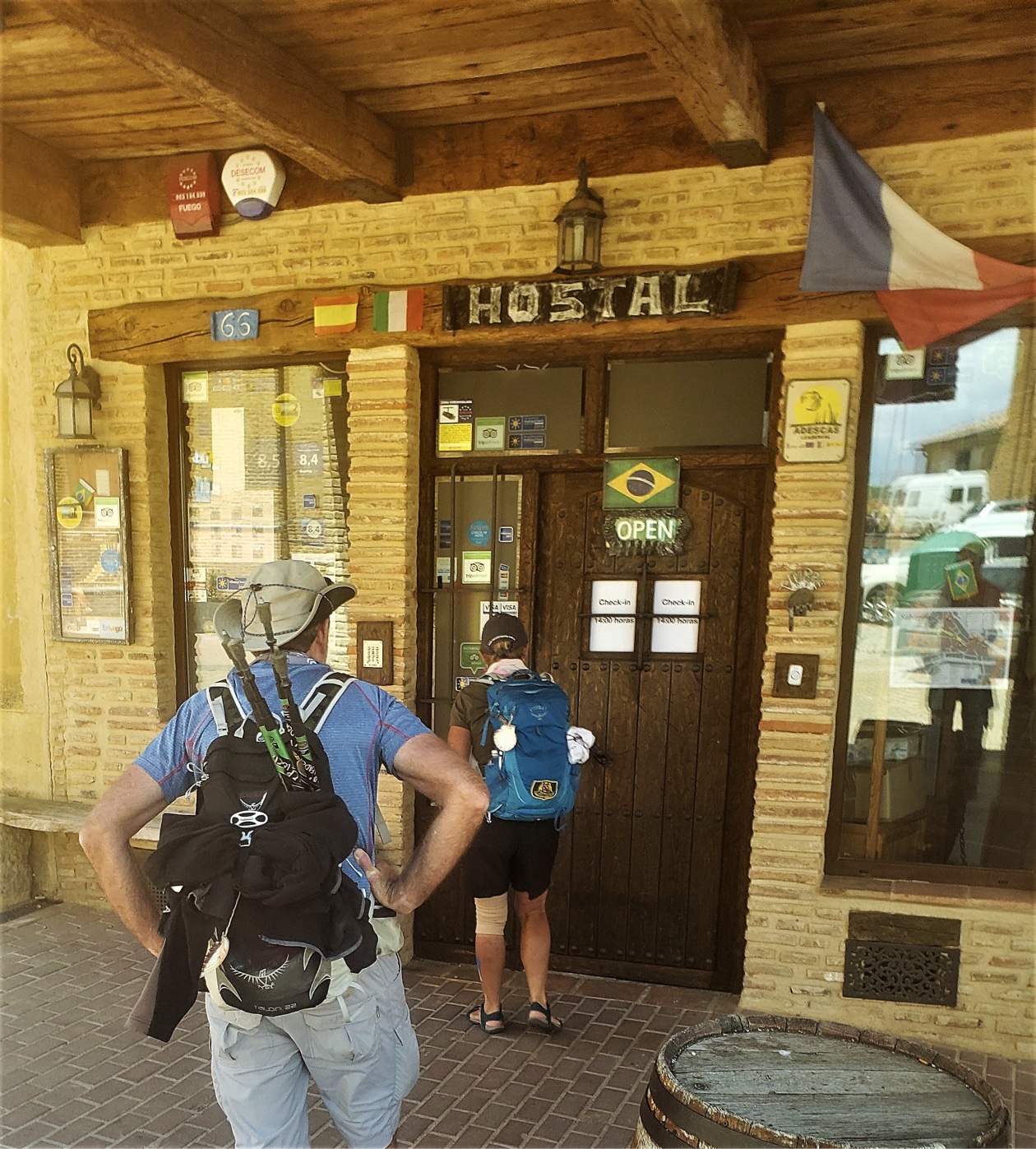
Every afternoon on the Camino ends the same way: at a door.
The packs come off first, lined up against the wall like tired soldiers. Then the boots, then the poles, leaning in the corner. Inside: the stamp for the credencial, the assignment of bunks, the blessed shower. It is the same small ritual in every town, and it never gets old — because the door means you made it. Another stage, another twenty-some kilometers, survived.
There is a particular feeling to that doorway hour. The day’s walking is done but the evening hasn’t started; pilgrims mill about in the strange in-between, comparing notes on the trail, icing knees, hanging laundry on every available rail. Strangers from the morning’s café become bunk neighbors. The Camino family, if you have one, reassembles by unspoken agreement. Nobody planned it. The door did the planning.
The albergue door is the Camino’s daily punctuation — a full stop at the end of each day’s sentence. Walk, arrive, rest, repeat. The rhythm is so simple it feels ancient, and it is: pilgrims have been ending their days at doors like this one for a thousand years.
FOR YOUR JOURNAL
What did your arrival ritual look like — and what did the door at the end of each day give you that the trail didn’t?