O Cebreiro: The Village Above the Clouds

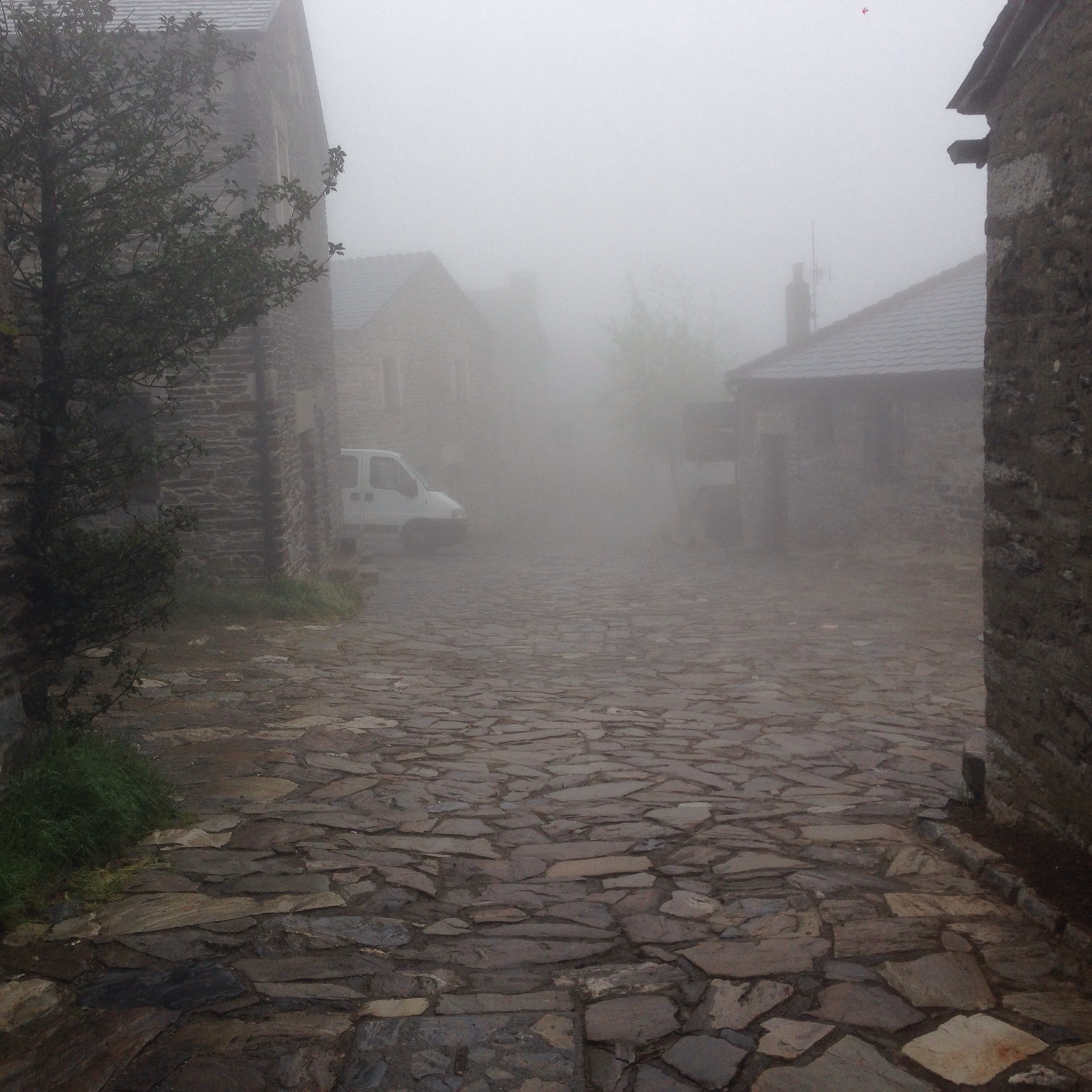
O Cebreiro in the fog, stone houses along a cobbled street

On the Camino Francés, between León and Santiago, the road climbs to a village that feels lifted out of time. O Cebreiro sits at 1,300 meters in the mountains of Galicia, and on misty mornings the clouds settle below it — you walk above them, along a ridge between valleys, with stone roundhouses called pallozas clustered against the wind.

Pilgrims have been stopping here for a thousand years. The little Romanesque church of Santa María holds a famous story: a Eucharistic miracle, a chalice and paten said to have turned to flesh and blood, that made O Cebreiro a pilgrimage site in its own right long before the modern Camino revival. Whether or not you know the legend, the place itself does something to you. The air is thinner, the light is stranger, and the descent into Galicia begins here.

Arrive in the late afternoon if you can. Watch the fog pour through the pass like something alive. Then sleep in the village, eat well, and start down in the morning — the road to Triacastela drops through chestnut forests, and it is one of the loveliest descents on any Camino.

A PRACTICE FOR THE CLIMB

Climb to O Cebreiro slowly, whatever your pace. The mountain rewards those who look up.

Leave the Itinerary at Home

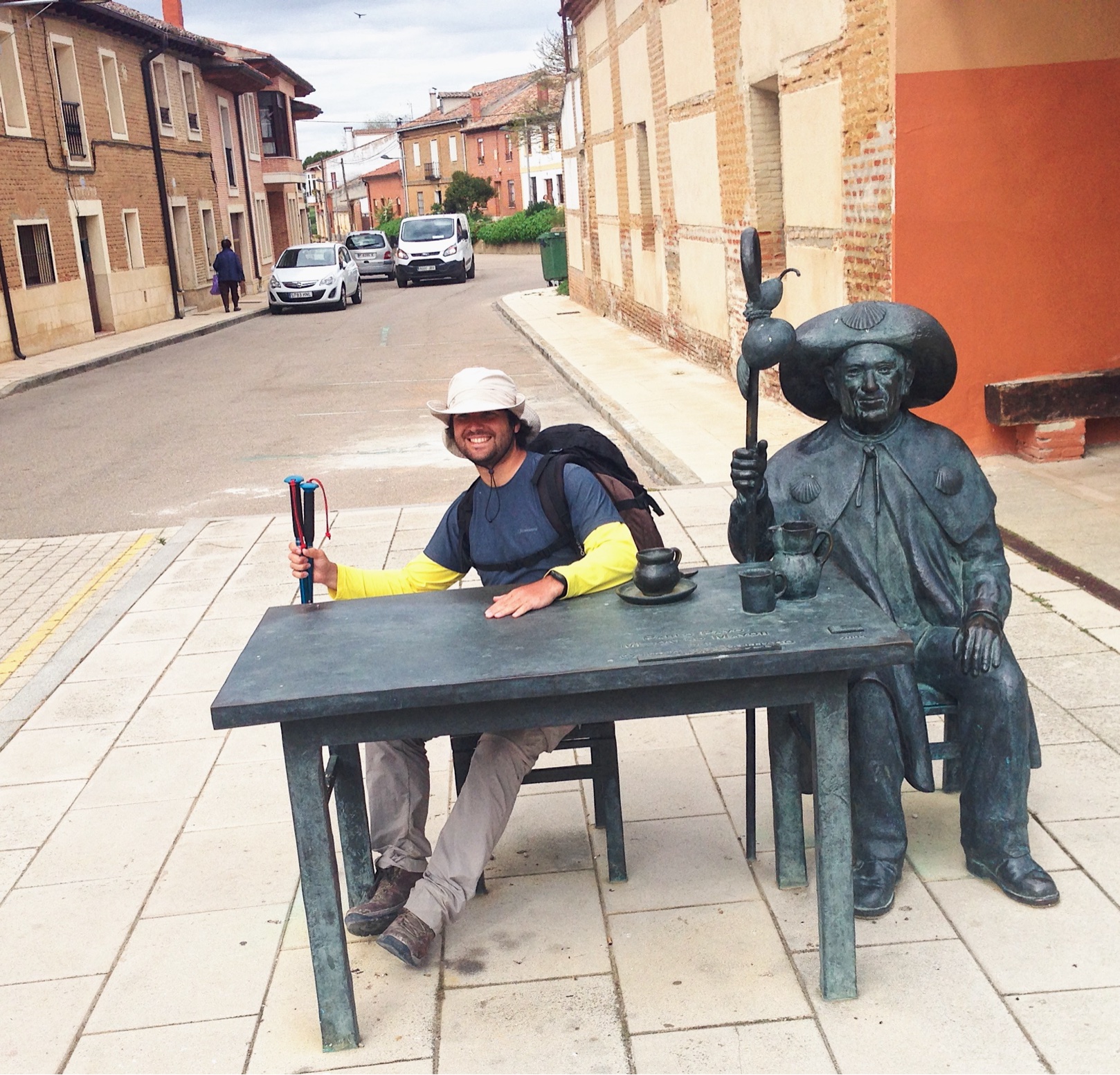
A pilgrim sits at a bronze table with a statue of a medieval pilgrim

The most experienced pilgrims share one piece of advice, and it sounds like no advice at all: don’t plan too much.

It is tempting to map every day before you go — the stages, the towns, the exact kilometer where you will stop each night. The guidebooks make it possible. But the Camino has a way of revising itineraries, usually by the third day: a blister, a new friend walking slower, a village festival you didn’t know about, a morning when your body simply says not today. The pilgrims who suffer most are not the unprepared. They are the over-planned, dragging a spreadsheet behind them like an anchor.

Leave room in the plan for the plan to change. Book the first night or two if it steadies your nerves, and then let the road schedule the rest. Some of the best days on any Camino are the unplanned ones — the short day that became a long lunch, the detour someone recommended at breakfast, the town you never intended to love.

The itinerary is a map. The Camino is the territory. Walk the territory.

A QUESTION TO CARRY

What would change if you planned half as much — and trusted twice as much?

Your Feet Are the Pilgrims

Here is the unglamorous truth nobody puts on the postcard: the Camino is walked on feet, and feet have opinions.

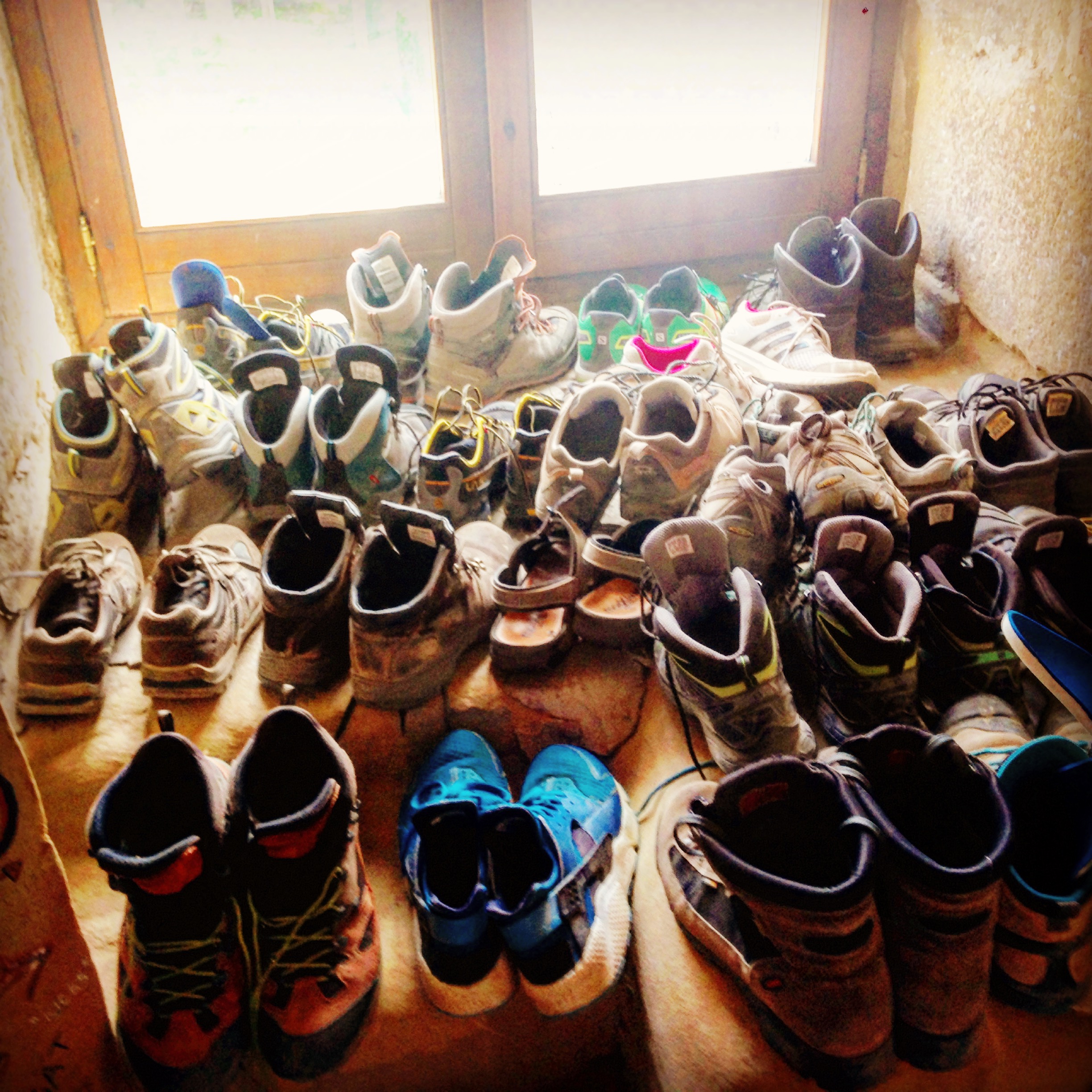
Every seasoned pilgrim has a foot-care sermon, and they are all the same sermon. Break in your boots until they are boring — months, not weeks. Wear the socks you will walk in, on the walks you train on. Learn the hot spot, the small warm warning that appears an hour before a blister, and stop the moment you feel it: air the foot, tape it, change the sock. Vaseline in the morning. Compeed in the pack, not in the bottom of the pack. And at the midday break, take the boots off. Let the feet breathe. They are doing all the work.

It sounds like mere logistics, but ask any pilgrim and they will tell you it becomes something else. Tending your feet, kilometer after kilometer, is the Camino’s daily lesson in attention — noticing the small signal before it becomes the big problem, caring for the body that carries the spirit. The pilgrims who finish are rarely the fittest. They are the ones who listened earliest.

Be kind to your feet and they will take you astonishingly far. Ignore them and they will teach you, quickly and memorably, who is really in charge.

A PRACTICE FOR THE WEEKS BEFORE
On your next training walk, stop at the halfway point, take your boots off, and look at your feet. This small ritual, repeated daily on the Camino, saves more pilgrimages than any gear.

The Communal Table

Somewhere between the bunk beds and the morning coffee, the real sacrament of the Camino happens at the table.

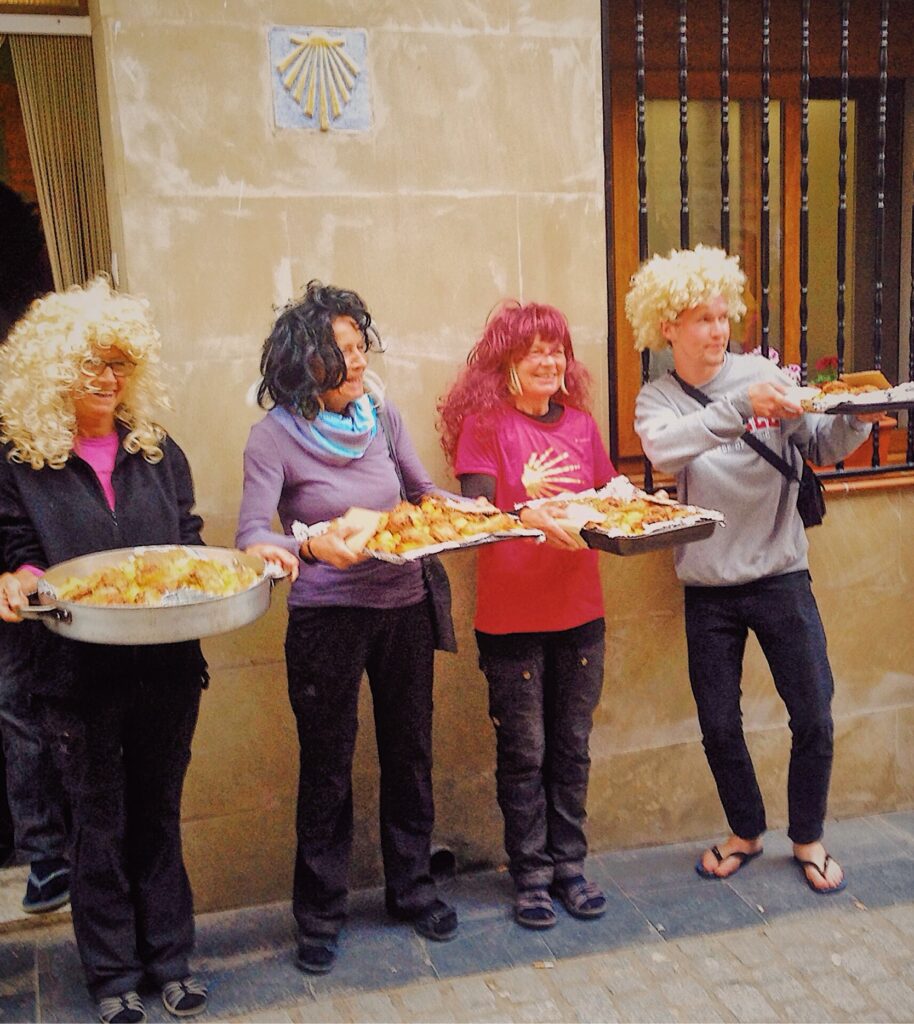
It starts in the afternoon, in albergue kitchens up and down every route: pilgrims pooling what they bought in the village shop — pasta, a bag of salad, bread, whatever cheese was cheapest — and cooking together in a chaos of languages. Someone’s mother taught them this sauce. Someone else has never boiled water. It does not matter. By eight o’clock, twenty strangers are sitting shoulder to shoulder at a long table, passing the bread, and the day’s kilometers have made everything taste better than it should.

The communal meal is where the Camino does its quietest work. At the table, nobody is a tourist. The Korean student and the German retiree and the Brazilian nurse discover they have the same blister in the same place. Stories come out that would never survive daylight — told over second helpings, in the particular honesty that exhaustion and red wine produce. Friendships that will last for years are routinely founded on nothing more than a shared pot of spaghetti.

FOR YOUR JOURNAL
Who did you break bread with on your Camino — and what did the table teach you that the trail didn’t?

Finisterre: The End Beyond the End

Santiago is not the end for everyone. Ninety kilometers past the cathedral, the road keeps going — west, downhill, toward the sea — to a lighthouse on a cliff that the Romans believed was the edge of the world. Finis terrae. The end of the earth.

The walk to Finisterre takes three or four days, and it feels different from everything before it. The crowds thin. The urgency lifts. Pilgrims who raced toward Santiago find themselves slowing down, almost reluctant, as if the road had one more thing to say and was taking its time saying it. There is a particular tenderness to these last kilometers — the Camino exhaling.

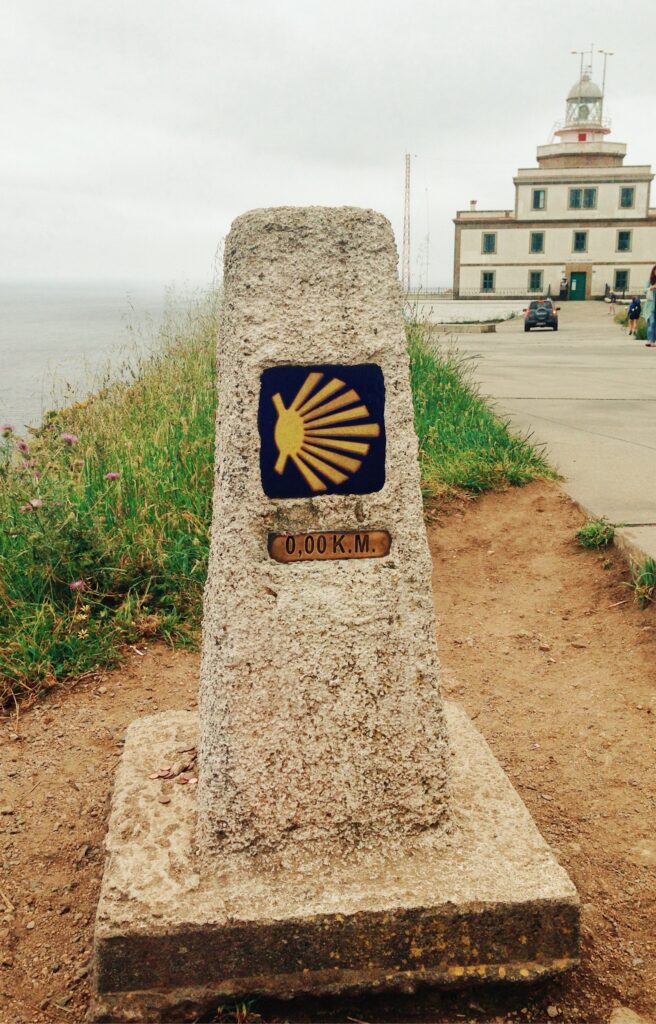
At the cape, there is a lighthouse, a 0.0 km marker, and the Atlantic breaking against the rocks far below. The old tradition says to watch the sun go down into the ocean — the same sun you walked under all those weeks — and to burn something: a sock, a note, a piece of the person you were when you started. Not every pilgrim does it. But everyone who stands there understands the impulse. Something has finished, and the sea is large enough to hold it.

Then you turn around, or you don’t. Some walk back. Some take the bus. It hardly matters. Finisterre teaches the last lesson of the Camino: that endings are also just places, and the road goes on past every one of them.

A PRACTICE FOR THE FINISH
If you walk to Finisterre, bring something small to leave behind — and watch the sun set into the water at least once.

Pack Light, Walk Far

The first teacher on the Camino is not a person. It is the pack.

Everything you carry, you carry up every hill. There is no porter, no trunk, no “I’ll deal with it later.” By the third day, every pilgrim has the same quiet reckoning with their bag: the extra book, the just-in-case jacket, the third pair of trousers — each one suddenly, obviously, too heavy. The road has a way of editing your choices.

Veteran pilgrims will tell you the number: somewhere around eight kilos, not counting water. But the number is not the point. The point is the practice of choosing. Lay everything out on the bed. Pick it all up, piece by piece, and ask of each thing the only question that matters: will I carry this up a mountain? What survives that question is what you need. Almost everything else is fear, disguised as preparation.

There is a reason this feels spiritual and not merely practical. The pack is the one part of the Camino you assemble before you go, and it becomes a small, honest portrait of your attachments. Walking light is not about deprivation. It is about discovering how little you need to be fully equipped — and wondering, on the long climbs, what else in your life might be that light if you let it.

A PRACTICE FOR THE PACKING
Lay out everything you plan to carry. Now remove three things. Sit with the lightness. That feeling is the beginning of the Camino.

Five Times on the Camino: What Changed

People ask why you would walk the same road five times. It’s a fair question, and the honest answer is that it isn’t the same road — because you aren’t the same pilgrim. The Camino Francés hasn’t moved. The Alto de Perdón still waits above Pamplona, the bridge at Puente la Reina still crosses the Arga, the meseta still tests your patience somewhere after Burgos. What changed, walk over walk, was me.

The first highlights never wear out

On my first Camino, in the spring of 2016, I climbed out of Pamplona to the Alto de Perdón and stood among the iron pilgrims in the wind. Fantastic 360° views of the Navarran countryside, the Camino villages laid out below, and a downhill so steep and rocky that it punished anyone who’d spent too long admiring them. I wrote at the time that it was one of the first highlights of the Francés. Five walks later, it still is. That’s the first thing the Camino teaches a repeat pilgrim: the landmarks don’t fade with familiarity. The Romanesque bridge leaving Agés, the halfway chapel of the Virgen del Puente, the first sight of Castrojeriz under its castle — they greet you like people you know.

Where you sleep shapes the walk

Every first-time pilgrim worries about the bed. I did. In Castrojeriz, in May 2016, I ended up at the Hostal Iacobus because there were simply no beds left anywhere else in town — and it was good, clean, with a large room, hot showers, and comfortable beds. That’s the Camino in miniature: the plan fails, and the road provides anyway.

Over five walks I’ve slept in most of what’s out there. A donativo albergue where pilgrims sleep on floor mats, eat a communal meal together, and gather for pilgrim mass and candlelit confessionals — the most interesting night of any Camino I’ve walked, and it asks nothing but a donation. A restored house in Puente la Reina with a garden, in October, with hot showers and a breakfast I still remember. A hotel in Burgos I liked so much in October that I stayed there twice on the same walk. And yes — a fifty-bed overflow dorm in Estella with rusty iron bunks and the loudest symphony of snoring I have ever heard. I wrote “Avoid room 5!” in my notes, and I meant it, and I’d still trade a quiet hotel corridor for that dorm’s stories.

The lesson isn’t that albergues are better than hotels or the reverse. It’s that the bed is part of the pilgrimage, not an interruption of it — and that the communal table and the shared dorm give you something a private room can’t: the other pilgrims.

The table is half the Camino

Ask me about 2016 and I’ll tell you about a bar in León — Camarote Madrid — packed on a Saturday afternoon with local families, three generations deep, and the best paella I ate in Spain served as a tapa. Or a plate in Burgos at Cervecería Morito: blood sausage, mushrooms, red peppers, fries, a fried egg, and gulas over the top. Typical Burgos eating. Mighty tasty.

The Camino feeds you if you let it. Eat where the locals eat. Stop at the wine fountain at Irache — free wine, though be prepared for a trickle and have some patience; everyone’s taking photos. End the day on Calle Laurel in Logroño, mushroom by mushroom. My rule, written after a dinner in Burgos and never revised: always drink Ribera in Spain. Nothing compares.

The people are the point

In Los Arcos, in the spring of 2016, I stayed in a quirky little place with small shared rooms and a patio, and there I met several Camino friends with whom I walked all the way to Santiago. So it just goes to show. You don’t choose your Camino family; you bunk near them.

That’s what changes by the fifth walk. The first time, you’re measuring yourself against the road — the climbs, the distances, whether your feet will hold. Later, you measure the walk by who’s at the table. A hard-working woman and her son running the albergue in Cardeñuela Riopico. A server in Roncesvalles who sent me to a restaurant in Pamplona I still recommend. The hospitaleros who keep the whole fragile, wonderful system running on donations and goodwill. The Camino is a machine for meeting people, disguised as a long walk.

What I’d tell a first-timer

  • Don’t race for beds, but respect the day. Arrive tired in a full town once, as I did in Castrojeriz, and you’ll learn to start earlier or book the busy stages. Both are fine. Panic is the only wrong option.
  • Stay in a donativo albergue at least once. Floor mats and all. It’s the Camino at its oldest and best.
  • Mix your nights. An albergue for the fellowship, a good hotel when your body asks for it. The Monasterio San Zoilo in Carrión de los Condes remains one of my favourite places to stay anywhere on the Camino Francés — a treat is also part of the tradition.
  • Eat the local thing in the local place, even if you can’t pronounce it. Especially then.
  • Leave room for the unplanned. The best meal, the best bed, and the best friends of my first Camino were none of them planned.

Why I built My Camino Bed

Somewhere along those walks I started doing what pilgrims do: keeping notes on every place I passed, slept, and ate — hundreds of them, as it turned out. When I built My Camino Bed, I gave it one rule, and it hasn’t changed: list all the lodgings. Not just the ones that earn a commission — the municipal albergue, the donativo, the four-room pensión — because pilgrims are attached to the albergue experience in a way no booking engine understands, and a directory that only lists what pays betrays the spirit of the road it serves.

Five times I’ve walked it. The road hasn’t changed. I have — and that’s rather the point of going.

Walk Before You Walk

Well-worn walking shoes, ready for the Camino

The best preparation for the Camino is not bought. It is walked — in the weeks before departure, on ordinary streets, in ordinary shoes that are slowly becoming Camino shoes.

Walk three times a week if you can. Break in the boots until they stop being a topic. Learn your natural pace — the one you fall into when no one is watching. Discover what your body says at kilometer fifteen, and what your mind does when your body is occupied. That restless, circling, settling mind? That is the Camino, rehearsing.

Walk once in weather you would rather avoid. The road will not check the forecast before sending rain, and there is a particular confidence that comes from knowing you have already been wet and kept going.

And be gentle with the plan. The strongest pilgrims are not the ones who punish their bodies into readiness. Walk, rest, walk again. The first days on the Camino should be shorter than your pride suggests. The road is long; there is no prize for arriving exhausted.

A PRACTICE FOR THE WEEKS BEFORE
Three walks a week. One of them in weather you’d rather avoid. Notice everything.

The Hands That Hold the Door

A hospitalero welcoming pilgrims at an albergue

In albergues along every Camino, the door is opened by volunteers called hospitaleros. Many of them walked the Camino first — and then came back to give it away.

A hospitalero stamps your credencial, shows you to a bunk, cooks the communal meal, tends a blister, reminds the dormitory toward quiet at ten. The work is ordinary and it is everything. They are paid nothing. They ask nothing. The coffee in the morning is simply there.

Most hospitaleros will tell you, if you ask, that they are repaying a debt that cannot be repaid — only passed on. Someone once made room for them at a crowded table. Someone once slowed their pace without being asked. So they stand at the door now, holding it open for whoever comes next.

This is the quiet economy the Camino runs on: you receive, and one day, in whatever form your life allows, you give. Not out of obligation. Out of having been changed by a kindness you did not earn.

FOR YOUR JOURNAL
When did you last let yourself be served — and what did it teach you about giving?

Cruz de Ferro: Laying Down the Stone

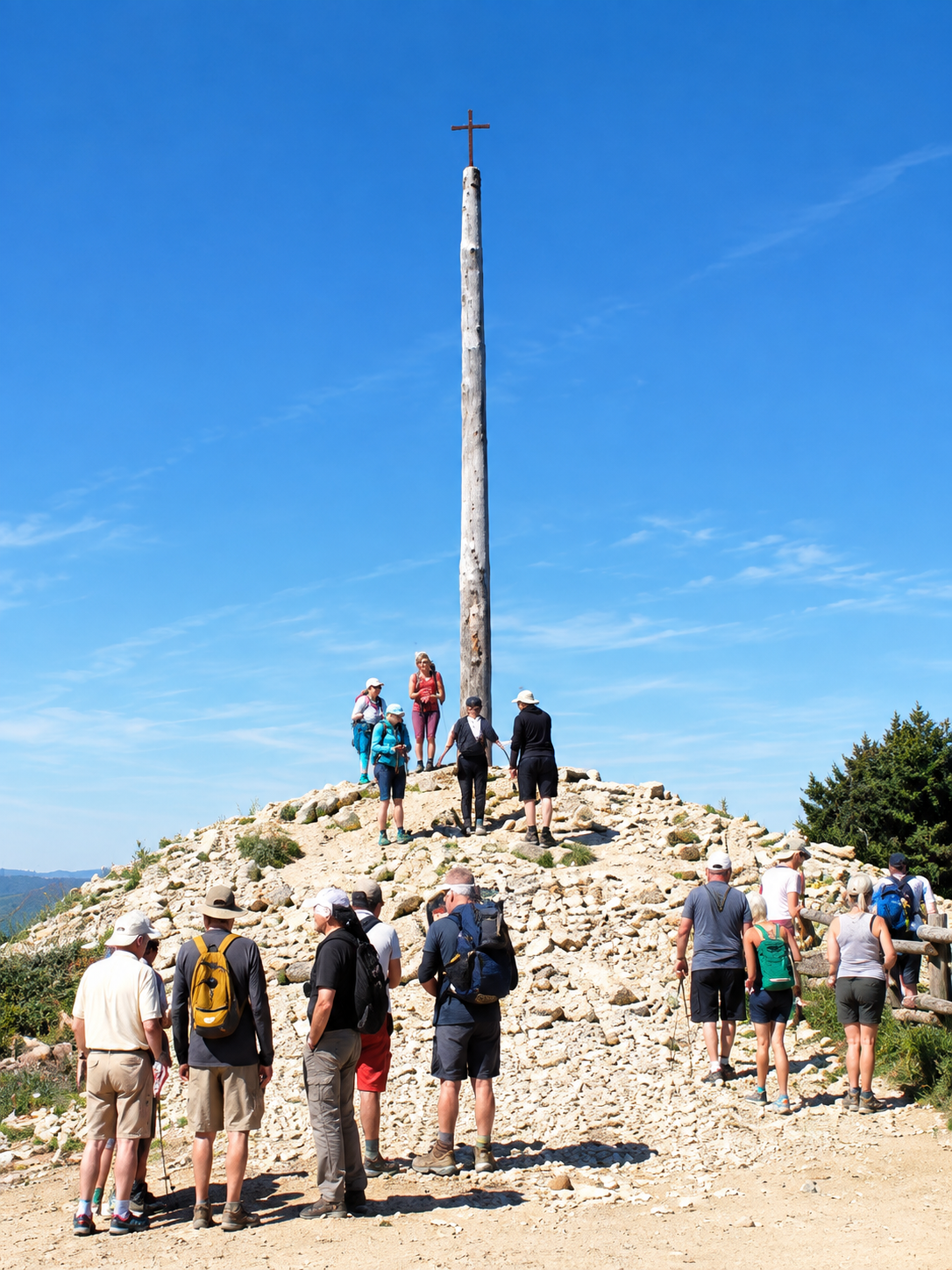
The iron cross of the Cruz de Ferro above a mound of pilgrim stones

Between Foncebadón and Manjarín, at nearly 1,500 meters, an iron cross stands above a mound of stones. Pilgrims have been adding to that mound for generations — each stone carried from home, each one meaning something.

The tradition is simple. Before you leave, choose a small stone. Let it stand for whatever you need to set down: a grief, a guilt, a fear, a gratitude too big for words. Carry it in your pack across the miles. Then, at the foot of the cross, lay it down and keep walking.

The climb to the Cruz de Ferro comes after Rabanal del Camino, on a stretch of the Camino Francés where the landscape turns spare and honest. There is no spectacle at the top — no ticket, no ceremony, no one watching. That is the point. The laying down is between you and the road.

What strikes most pilgrims is the size of the mound. Thousands of stones, and the pile keeps growing. Every one of them was carried a long way by someone who decided that some burdens are only set down by walking them somewhere.

A PRACTICE FOR THE PATH
Choose a small stone before you leave home. Decide what it carries — then let the road do the rest.