
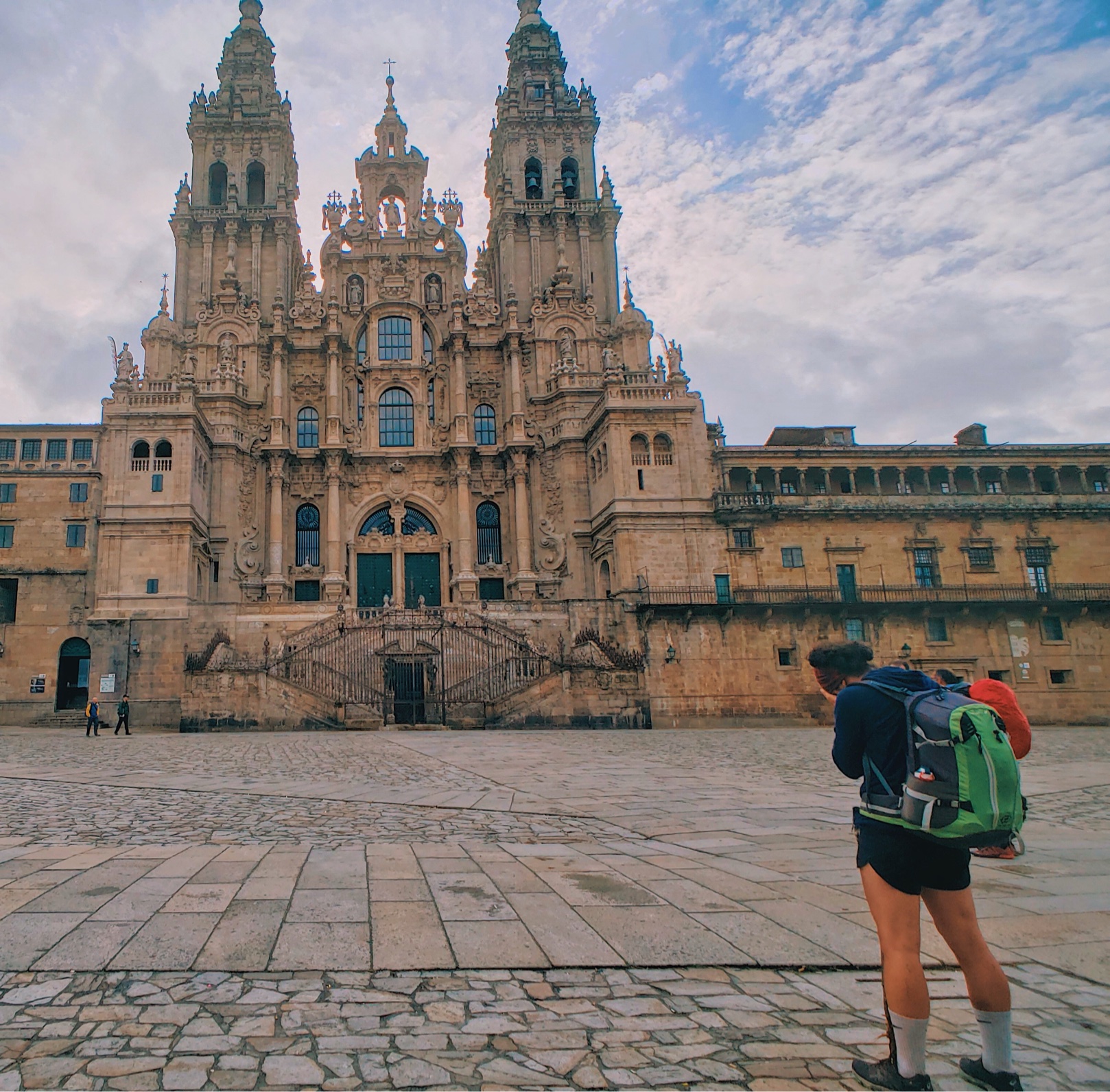
After all the kilometers, it ends — or begins — in a square. The Praza do Obradoiro opens suddenly at the end of a narrow street, and there is the cathedral facade, baroque and golden, with bagpipes often playing somewhere out of sight. Pilgrims arrive weeping, laughing, limping, or all three at once.
The rituals of arrival are old and specific. You lay your hands on the statue of Saint James behind the altar — the embrace pilgrims have made for centuries. You visit the tomb in the crypt below. If you are lucky, you witness the botafumeiro: the giant incense burner, swung by eight men on a rope, arcing across the transept in a plume of smoke. It was designed to fumigate medieval pilgrims. It still takes the breath away.
But ask finishers what the arrival felt like, and many will say the strangest thing: anticlimax, mixed with the joy. The goal you walked toward for weeks is suddenly behind you, and the road ahead is ordinary life. That hollow, spacious feeling is not the end of the pilgrimage. Most pilgrims will tell you it is the beginning of the real one — the walk home, carrying whatever Santiago gave you.
A PRACTICE FOR THE ARRIVAL
When you reach the square, sit down before you do anything else. Let the arrival land before you start documenting it.