
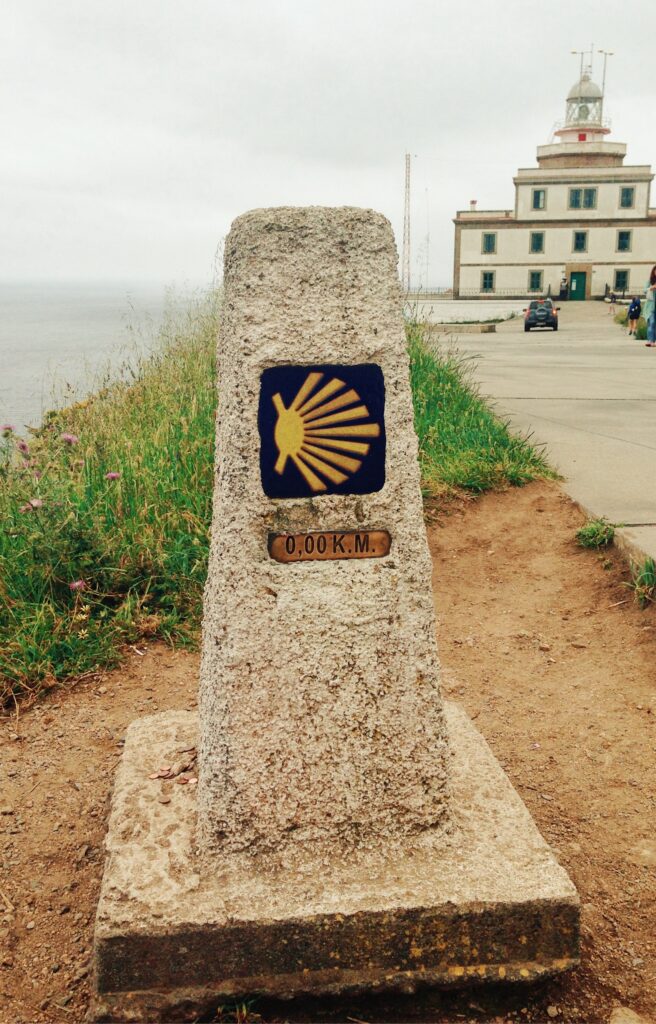
Santiago is not the end for everyone. Ninety kilometers past the cathedral, the road keeps going — west, downhill, toward the sea — to a lighthouse on a cliff that the Romans believed was the edge of the world. Finis terrae. The end of the earth.
The walk to Finisterre takes three or four days, and it feels different from everything before it. The crowds thin. The urgency lifts. Pilgrims who raced toward Santiago find themselves slowing down, almost reluctant, as if the road had one more thing to say and was taking its time saying it. There is a particular tenderness to these last kilometers — the Camino exhaling.
At the cape, there is a lighthouse, a 0.0 km marker, and the Atlantic breaking against the rocks far below. The old tradition says to watch the sun go down into the ocean — the same sun you walked under all those weeks — and to burn something: a sock, a note, a piece of the person you were when you started. Not every pilgrim does it. But everyone who stands there understands the impulse. Something has finished, and the sea is large enough to hold it.
Then you turn around, or you don’t. Some walk back. Some take the bus. It hardly matters. Finisterre teaches the last lesson of the Camino: that endings are also just places, and the road goes on past every one of them.
A PRACTICE FOR THE FINISH
If you walk to Finisterre, bring something small to leave behind — and watch the sun set into the water at least once.